Chapter 1: Reproduction in Organisms Class 12 Notes PDF Download: Here we have provided complete handwritten notes for Class 12 Biology Chapter 1 Reproduction in Organisms Class 12 Notes PDF for free. These notes are also useful for CBSE NCERT / Boards NEET and other medical Examinations. These notes are uploaded on Google Drive and you can preview it before downloading the PDF. Click on link below to download the PDF. PDF file of the handwritten notes will be saved in your device.
 Join Telegram
 Join WhatsApp
Details of the “Reproduction in Organisms Class 12 Notes PDF Download “
| Subject Name | Details |
|---|---|
| Subject | Biology |
| Class | 12th (XII) |
| Chapter Name | Reproduction in Organisms |
| Language | English |
| Notes Type | Handwritten Notes |
| Website Name | StudyCart24.com |
| Download Link Type | Google Drive Link |
| Cost of the Notes | Free |
| Notes useful for | Class 12th , NEET, Entrance Exams, Competitive Exams (Recruitment Exams), and other Medical Exams. |
| Total Pages | Part 1: Total 9 Pages, Part 2: Total 9 Pages |
| PDF File Size | Part 1: PDF Size – 12 MB, Part 2: PDF Size – 5 MB |
Preview and Download links of Reproduction in Organisms Class 12 Notes PDF
Here is the preview of the Reproduction in Organisms Class 12 Notes PDF hosted on Google Drive
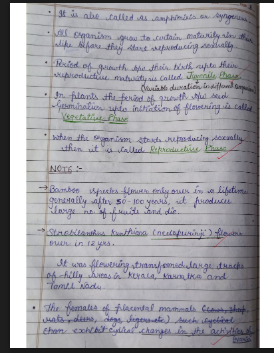
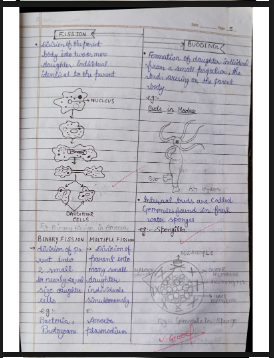

Part 1: Reproduction in Organisms Class 12 Notes PDF Preview”
Part 2: Reproduction in Organisms Class 12 Notes PDF Preview”
Related Notes:
Recommended Notes on Amazon for Class 12 Biology
| Recommended Book/ Notes for Class 12 Biology | Amazon Link |
|---|---|
| All In One Biology class 12th Based On Latest NCERT For CBSE Exams 2025 | Mind map in each chapter | Clear & Concise Theory | Intext & Chapter Exercises | Sample Question Papers | View on Amazon |
| NEET Class Notes of Complete Biology (Set of 6 Volumes) By Career Point Kota [Paperback] Career Point Kota | View on Amazon |
| MTG 100 Percent Biology For Class 12 CBSE Board Exam 2024-25 | Chapter-Wise Self-evaluation Test Theory Diagrams & Practical Available All in One Book | As Per Rationalised NCERT & CBSE Syllabus [Paperback] MTG Editorial Board | View on Amazon |
🙏 Support Our Work
We work very hard to create quality handwritten notes to support your learning journey. Every page is the result of hours of dedication and care. If you find our efforts valuable, please consider supporting us. Even a small contribution of ₹5, ₹10, ₹50, or ₹100 — whatever feels right to you — can make a big difference. Your support helps us continue this platform and keep the notes accessible to everyone. Donate securely via PhonePe – your kindness truly means a lot.

UPI ID:
(Tap to copy)
Please Donate ₹5, ₹10, ₹50, ₹100 or whatever feels right to you.
Basics of the Chapter 1: Reproduction in Organisms Class 12 Notes
Reproduction is one of the most vital biological processes for the continuation of life. The chapter “Reproduction in Organisms” introduces the basic concepts of reproduction, its types, and its significance. This chapter is not just important for board exams but also forms the foundation for competitive exams like NEET. It explains how various organisms reproduce, their life spans, and reproductive strategies.
Key highlights of the chapter include:
- Types of Reproduction: Asexual and Sexual.
- Reproductive Phases: Juvenile, reproductive, and senescence phases.
- Mechanisms of Reproduction: Processes like budding, binary fission, and sexual reproduction.
Features of our Reproduction in Organisms Class 12 Handwritten Notes
Our handwritten notes are designed to help students grasp the concepts effectively and efficiently. Here are some unique features of these notes:
- Concise Content: Key points are summarized for quick revision.
- Exam-Focused: Covers all important questions frequently asked in board exams and NEET.
- Visual Aids: Includes simple diagrams for better understanding of processes and structures.
- Easy Language: Simplifies complex concepts with straightforward explanations.
- Topic Segmentation: Notes are organized topic-wise for clarity.
- PDF Format: Conveniently downloadable for offline access.
These features make the notes ideal for last-minute preparation as well as detailed study sessions.
How to Prepare for This Chapter (Reproduction in Organisms )
Preparation is key to mastering this chapter. Follow these steps to make your study sessions productive:
- Read NCERT Thoroughly: Start with the NCERT textbook to build a solid foundation.
- Highlight Important Points: Mark definitions, examples, and key terms for quick revision.
- Understand the Life Cycles: Focus on diagrams and life cycles of organisms such as amoeba, yeast, and flowering plants.
- Practice Diagrams: Reproductive structures are frequently asked in exams, so ensure you can draw and label them accurately.
- Revise Regularly: Use these handwritten notes to revise important concepts weekly.
- Solve Previous Year’s Papers: This helps in understanding the type of questions asked in exams.
- Time Management: Allocate sufficient time for each topic to ensure thorough preparation.
Important Topics of This Chapter (Reproduction in Organisms )
To excel in this chapter, focus on these critical topics:
- Modes of Reproduction: Asexual reproduction (binary fission, budding, fragmentation) and sexual reproduction.
- Reproductive Structures: Detailed study of gametes, zygotes, and embryos.
- Life Span of Organisms: Variations in life spans of different species.
- Reproductive Strategies: The difference between uniparental and biparental reproduction.
- Reproductive Phases: Juvenile phase, reproductive phase, and senescence.
- Diagrams: Structure of flowers, binary fission in amoeba, and budding in yeast.
Focusing on these topics will ensure you cover the core content of the chapter.
Previously Asked Questions from Reproduction in Organisms Chapter
Exam questions often repeat or are similar in pattern. Here are some of the previously asked questions from this chapter:
- Short Answer Questions:
- Define asexual reproduction. Give two examples.
- What are clones? Provide examples.
- Write a short note on binary fission.
- Long Answer Questions:
- Explain the differences between asexual and sexual reproduction.
- Describe the process of budding in yeast with a diagram.
- Discuss the significance of the juvenile phase in organisms.
- Diagram-Based Questions:
- Draw and explain binary fission in amoeba.
- Illustrate and label the reproductive structures of a flower.
By practicing these questions, you can enhance your confidence and exam performance.
Questions That May Come in Exams from Reproduction in Organisms Chapter
Here are some potential questions that might appear in your exams:
Short Answer Questions:
- What is parthenogenesis? Give an example.
- Why is reproduction essential for living organisms?
- What is vegetative propagation? Name two plants that reproduce this way.
Long Answer Questions:
- Compare sexual reproduction in plants and animals with suitable examples.
- Explain the phases of the life cycle in detail.
- Discuss the advantages of asexual reproduction in organisms.
Diagram-Based Questions:
- Draw and label the structure of a flower showing its reproductive organs.
- Diagram of budding in hydra or yeast.
One-Liners with Answers from Reproduction in Organisms Chapter
Here are some quick one-liners to help with revision:
- Q: What is the lifespan of a banyan tree?
A: More than 200 years. - Q: What is the reproductive unit in sexual reproduction?
A: Gamete. - Q: Which type of reproduction occurs in spirogyra?
A: Fragmentation. - Q: Name an organism that reproduces by binary fission.
A: Amoeba. - Q: What is the vegetative propagule in potato?
A: Eyes.
FAQs on Reproduction in Organisms Class 12 Notes PDF
Q1. Why are handwritten notes useful for Class 12 Biology?
A: Handwritten notes simplify complex topics, making it easier to understand and revise.
Q2. Are these notes sufficient for competitive exams like NEET?
A: Yes, these notes cover fundamental concepts required for NEET preparation.
Q3. Can I access these notes offline?
A: Absolutely! Download the PDF, and you’re good to go.
Q4. What is the best way to memorize definitions?
A: Write them down multiple times and revise regularly using flashcards or notes.
Tips for Effective Study
- Break your study sessions into smaller intervals to enhance focus.
- Use flowcharts and mind maps to connect related concepts.
- Discuss topics with peers to gain different perspectives.
- Practice diagrams regularly to improve accuracy and speed.
Conclusion
The chapter “Reproduction in Organisms” is a cornerstone of Class 12 Biology. By utilizing these handwritten notes, you can streamline your preparation and gain a thorough understanding of the topic. These notes are curated to save your time while ensuring comprehensive coverage of the syllabus.
Download the notes now and take your first step toward mastering this chapter. Best of luck with your studies! If you have any questions or need further guidance, feel free to leave a comment below.
Here we have provided “Reproduction in Organisms Class 12 Notes PDF Download” for free. hope you have downloaded it successfully without facing any issue. If you have any suggestion or query, please send email or contact us though our help help.
Tags:
Reproduction in Organisms Class 12 Notes PDF,
Reproduction in organisms class 12 notes pdf download,
Reproduction in Organisms Class 12 Notes self Study,
Reproduction in organisms Class 12 NCERT PDF,
Reproduction in organisms class 12 notes handwritten,
Reproduction in organisms Class 12 questions and answers PDF,
Class 12 Biology Chapter 1 Notes PDF Download,
reproduction in organisms handwritten notes pdf,
Reproduction in organisms handwritten notes pdf maharashtra board
Reproduction in organisms handwritten notes pdf class 12
Reproduction in organisms handwritten notes pdf cbse
Handwritten Notes for Class 12 Biology PDF
Class 12 Biology short Notes PDF Download
Class 12 Biology short Notes PDF Download in English
Organism and population handwritten notes
Class 12 Biology handwritten notes PDF Maharashtra board