
Chapter 12: Linear Programming Class 12 NCERT Solutions | Free Handwritten Notes PDF Download: Linear Programming is a highly practical and application-oriented chapter in Class 12 Mathematics that deals with optimizing (maximizing or minimizing) a particular quantity under given constraints. In real-life situations, such as business, economics, and manufacturing, we often face problems like minimizing cost, maximizing profit, or efficiently utilizing limited resources. Linear Programming provides a systematic approach to solve such problems using mathematical techniques.
 Join Telegram
 Join WhatsApp
In this chapter, we study problems that can be expressed through a linear objective function (like profit or cost) subject to a set of linear inequalities known as constraints. The feasible region, formed by these inequalities, represents all possible solutions. The optimal solution lies at one of the vertices (corner points) of this region, which we find using the graphical method.
The NCERT syllabus for this chapter focuses mainly on two-variable problems, making it easy to visualize and solve them graphically. This chapter not only strengthens logical reasoning and analytical thinking but also builds a foundation for higher studies and competitive exams.
Thus, Linear Programming is a powerful tool for decision-making and resource management, helping students connect mathematics with real-world applications.
Preview of Linear Programming Class 12 NCERT Solutions | Free Handwritten Notes PDF Download in Hindi
Images of Linear Programming Class 12 NCERT Solutions


Related Free Notes from Studycart24.com of Class 12
- Class 12 Biology Handwritten Notes PDF Free Download- StudyCart24.com
- Class 12 Business Studies Notes: FREE Notes Chapter 1 to 12
- Complete Class 12 Chemistry Notes PDF with All Chapters for Free
- Class 12 Computer Science Notes PDF in English Free Download
- Class 12 Geography Notes: Download Free PDF of All Chapters in English
- Class 12 Physics Handwritten Notes in English PDF Download
🙏 Support Our Work
We work very hard to create quality handwritten notes to support your learning journey. Every page is the result of hours of dedication and care. If you find our efforts valuable, please consider supporting us. Even a small contribution of ₹5, ₹10, ₹50, or ₹100 — whatever feels right to you — can make a big difference. Your support helps us continue this platform and keep the notes accessible to everyone. Donate securely via PhonePe – your kindness truly means a lot.

UPI ID:
(Tap to copy)
Please Donate ₹5, ₹10, ₹50, ₹100 or whatever feels right to you.
Suggested Notes Links from Amazon Related to Class 12 Math’s Handwritten Notes
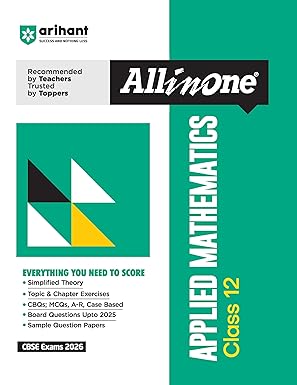
Arihant All in One Applied Mathematics Class 12 for CBSE Exams 2025-26 | Revised Edition as per latest syllabus | Simplified Theory, All Types of Exam Pattern Questions, CBQs, MCQs, A-R, Case Based, Sample Question Papers, Log Table
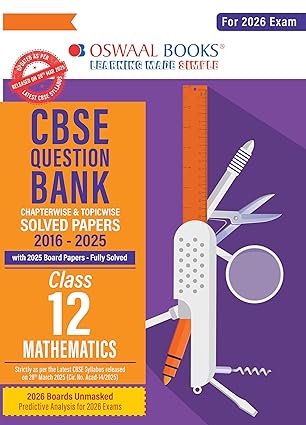
Oswaal CBSE Question Bank Chapterwise and Topicwise SOLVED PAPERS Class 12 Mathematics For Exam 2026
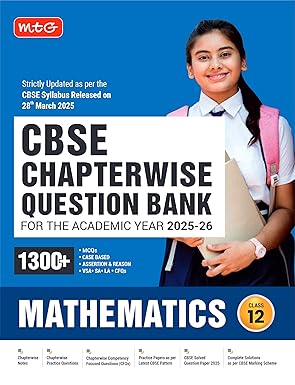
MTG CBSE Chapterwise Question Bank Class 12 Mathematics For 2026 Board Exam | As Per Latest CBSE Syllabus Released on 28 March 2025
Definition – Linear Programming Chapter 12 NCERT Solutions
Linear Programming (LPP) is a mathematical technique used to find the best possible outcome in a given situation, such as maximizing profit or minimizing cost, subject to a set of linear constraints. It involves three main components: decision variables (unknown quantities to be determined), an objective function (the quantity to be optimized), and constraints (inequalities representing restrictions like resources or capacity). The solution of an LPP lies within a feasible region, formed by the constraints on a graph. Using the graphical method, we find the optimal solution at one of the corner points of this region.
Key Features of Linear Programming Class 12 NCERT Solutions – Free Handwritten Notes PDF Download in Hindi
- Subject: Maths (Class 12 Math’s Chapter 12 Linear Programming )
- Language : Hindi
- Total pages : 24
- File size: 7.3 MB
- Format : PDF
- Well structured and easy to understand
- Includes importance formulas and definitions
- Covers all NCERT syllabus topics
- Useful for quick revision before exam
Topics & Sub-Topics – Chapter 12: Linear Programming Class 12 Math’s
- Introduction to Linear Programming
- Meaning and importance of Linear Programming
- Applications in real life (business, industry, economics, etc.)
- Mathematical Formulation of Linear Programming Problems (LPP)
- Objective function (maximization or minimization)
- Constraints and inequalities
- Decision variables
- Feasible region and feasible solutions
- Graphical Method of Solving LPP
- Plotting inequalities on graphs
- Identifying the feasible region
- Corner points (vertices) method
- Optimal Solution of LPP
- Corner Point Method (Vertex method)
- Finding the maximum/minimum value of the objective function
- Types of Linear Programming Problems
- Profit maximization problems
- Cost minimization problems
- Other real-life application problems
- Feasible & Infeasible Solutions
- Bounded feasible region
- Unbounded feasible region
- No solution cases
- Limitations of Linear Programming
- Assumptions in LPP
- Situations where LPP cannot be applied
15 Important Definitions from Chapter 12: Linear Programming (Class 12 Maths)
1. Linear Programming
A mathematical method to optimize (maximize or minimize) a linear objective function subject to a set of linear inequalities called constraints.
2. Objective Function
A linear function that needs to be maximized or minimized (e.g., profit or cost).
3. Constraints
The limitations or restrictions in the form of linear inequalities that the solution must satisfy.
4. Decision Variables
Unknown quantities whose values are to be determined to optimize the objective function.
5. Feasible Solution
Any point that satisfies all constraints of the LPP.
6. Infeasible Solution
A point that does not satisfy one or more constraints.
7. Feasible Region
The common region on the graph where all constraints are satisfied simultaneously.
8. Corner Point
The vertex (intersection point) of the feasible region where the optimal solution is usually found.
9. Optimal Solution
A feasible solution that gives the maximum or minimum value of the objective function.
10. Bounded Feasible Region
A closed feasible region where an optimal solution always exists.
11. Unbounded Feasible Region
An open feasible region where the solution may not always be finite.
12. Redundant Constraint
A constraint that does not affect the feasible region (it is automatically satisfied).
13. Infeasible LPP
A linear programming problem with no common region satisfying all constraints (no solution).
14. Graphical Method
A method of solving LPP by plotting constraints on a graph and identifying the feasible region and corner points.
15. Maximization/Minimization Problem
An LPP where the objective function is optimized to either achieve the maximum or minimum possible value.
Preparation Tips – Chapter 12: Linear Programming Class 12 Math’s
| S.No. | Preparation Tip |
|---|---|
| 1 | Understand the meaning of Linear Programming and its real-life applications. |
| 2 | Learn key terms: objective function, constraints, feasible region, corner points. |
| 3 | Revise how to frame LPPs from word problems (profit, cost, resources). |
| 4 | Practice drawing graphs for inequalities step by step. |
| 5 | Clearly shade the feasible region for given constraints. |
| 6 | Identify corner points (vertices) of the feasible region correctly. |
| 7 | Use the Corner Point Method to find the optimal solution. |
| 8 | Solve all NCERT examples and exercise questions thoroughly. |
| 9 | Practice previous years’ board questions for better exam preparation. |
| 10 | Work on speed & accuracy in plotting and calculations. |
| 11 | Revise types of problems (maximization & minimization separately). |
| 12 | Prepare short notes of definitions & formulas for quick revision. |
| 13 | Focus on bounded vs. unbounded regions and their implications. |
| 14 | Avoid common mistakes (wrong shading, sign errors, missing points). |
| 15 | Attempt extra practice problems from reference books for confidence. |
Why These Handwritten Notes Are Special for You? Class 12 Math’s
- Simple & Clear Language – No complicated jargon; easy for every student to understand.
- NCERT-Centric – Exactly as per CBSE Class 12 NCERT syllabus.
- Exam-Oriented Approach – Focused on board exam patterns & marking scheme.
- Step-by-Step Solutions – Every problem is solved with a clear, logical sequence.
- Graphical Method Made Easy – Visual & stepwise explanations for solving inequalities and finding feasible regions.
- Quick-Revision Pointers – Includes key terms, formulas & corner-point methods in short form.
- Solved Examples + Extra Practice – Covers NCERT questions + additional practice problems.
- Highlight on Common Mistakes – Helps you avoid frequent errors in LPP.
- Important Definitions – 15+ essential terms (feasible region, optimal solution, etc.) simplified.
- Shortcuts & Tips – Tricks for fast and accurate plotting & solving.
- Real-Life Connection – Explains practical uses (profit, cost, resource allocation).
- Board Exam Ready – Covers previous years’ important questions.
- Time-Saving Format – Designed for quick learning & revision.
- Visually Neat – Clean, well-organized handwritten format for easy recall.
- Perfect for Self-Study – No teacher needed; self-explanatory notes.
Top 15 Benefits of Using Handwritten Notes
| S.No. | Benefit |
|---|---|
| 1 | Easy to Understand – Written in simple and student-friendly language. |
| 2 | Quick Revision – Helps in revising the whole chapter in minimum time. |
| 3 | Exam-Oriented – Focused on NCERT & board exam pattern. |
| 4 | Boosts Memory Retention – Writing by hand improves learning and recall. |
| 5 | Step-by-Step Solutions – Clear and logical approach for solving problems. |
| 6 | Graphical Clarity – Neatly drawn graphs for Linear Programming problems. |
| 7 | Important Definitions Highlighted – Easy access to key terms and concepts. |
| 8 | Formulas at a Glance – All important formulas compiled in one place. |
| 9 | Error-Free Content – Carefully prepared to avoid mistakes. |
| 10 | Time-Saving – Saves time during exam preparation and last-minute study. |
| 11 | Includes Common Mistakes – Alerts you about frequent errors to avoid. |
| 12 | Self-Study Friendly – Designed for independent learning without extra help. |
| 13 | Covers NCERT + Extra Questions – Ensures complete practice. |
| 14 | Visually Organized – Clean and structured layout for better understanding. |
| 15 | Perfect for Board Exams & Competitive Tests – Builds strong conceptual base. |
Important Topics & Subtopics – Chapter 12: Linear Programming Class 12 Math’s
- Introduction to Linear Programming
- What is Linear Programming?
- Importance & real-life applications (business, economics, industry).
- Components of a Linear Programming Problem
- Decision variables (unknowns to be found).
- Objective function (to maximize/minimize).
- Constraints (resource limitations).
- Mathematical Formulation of LPP
- Translating word problems into equations & inequalities.
- Framing maximization and minimization problems.
- Graphical Method of Solving LPP
- Plotting linear inequalities on a graph.
- Shading the feasible region.
- Identifying corner points (vertices).
- Feasible & Infeasible Regions
- Bounded feasible regions – optimal solution always exists.
- Unbounded feasible regions – checking for infinite solutions.
- No solution cases (infeasible LPP).
- Optimal Solution & Corner Point Method
- Evaluating the objective function at corner points.
- Selecting the maximum/minimum value as the optimal solution.
- Special Cases in LPP
- Multiple optimal solutions.
- No feasible solution.
- Unbounded solutions.
- Types of LPP Problems
- Profit maximization.
- Cost minimization.
- Resource allocation & production problems.
- Checking Redundant Constraints
- Identifying constraints that do not affect the feasible region.
- Common Mistakes & Precautions
- Incorrect inequality signs.
- Wrong shading of the feasible region.
- Missing corner points.
- Limitations of Linear Programming
- Assumptions of LPP.
- When LPP cannot be applied.
Important Formulas – Chapter 12: Linear Programming Class 12 Math’s
| S.No. | Concept | Formula / Key Point |
|---|---|---|
| 1 | Objective Function | Z=ax+byZ = ax + byZ=ax+by (to maximize or minimize) |
| 2 | Decision Variables | x,yx, yx,y → unknowns to be determined |
| 3 | Constraints | p1x+q1y≤/≥/=r1p_1x + q_1y \leq / \geq / = r_1p1x+q1y≤/≥/=r1 (linear inequalities) |
| 4 | Feasible Region | Common solution set of all constraints |
| 5 | Corner Points | Vertices (intersection points) of the feasible region |
| 6 | Corner Point Method | Substitute each corner point into Z=ax+byZ = ax + byZ=ax+by |
| 7 | Optimal Solution | Select maximum/minimum value of Z at the corner points |
| 8 | Maximization Problem | Zmax=Max{ax+by}Z_{max} = \text{Max} \{ ax + by \}Zmax=Max{ax+by} for feasible vertices |
| 9 | Minimization Problem | Zmin=Min{ax+by}Z_{min} = \text{Min} \{ ax + by \}Zmin=Min{ax+by} for feasible vertices |
| 10 | Bounded Region | Closed feasible region → Optimal solution always exists |
| 11 | Unbounded Region | Open feasible region → Check if Z is bounded |
| 12 | Redundant Constraint | A constraint that does not affect the feasible region |
| 13 | Infeasible LPP | No common solution (no feasible region) |
| 14 | Unique Optimal Solution | Single vertex gives max/min value |
| 15 | Multiple Optimal Solutions | Same Z value at more than one corner point |
FAQs – Chapter 12: Linear Programming Class 12 Math’s
Linear Programming is a method to optimize (maximize or minimize) a linear objective function subject to linear constraints (inequalities).
It is the common area on the graph that satisfies all constraints.
In a 2-variable LPP, the optimal solution lies at a corner point (vertex) of the feasible region.
It involves evaluating the objective function at all vertices of the feasible region and selecting the best value.
It is a closed region where the optimal solution always exists.
It is an open region where the solution may not be finite; additional checking is needed.
Yes, if the objective function gives the same value at more than one corner point.
Yes, when there is no common region that satisfies all constraints.
It is simple and effective for two-variable LPPs and helps visualize feasible solutions.
Always substitute the solution in constraints to verify if it lies in the feasible region.
Profit maximization and cost minimization problems based on real-life situations.
Practice graph plotting, accurately shade feasible regions, and evaluate all corner points carefully.
Preparation Tips – Chapter 12: Linear Programming Class 12 Math’s
| S.No. | Preparation Tip |
|---|---|
| 1 | Understand the Basics – Grasp terms like objective function, constraints, feasible region, and corner points. |
| 2 | Master Problem Formulation – Practice converting word problems into mathematical form (objective function + constraints). |
| 3 | Practice Graph Plotting – Learn to correctly draw inequalities on a graph. |
| 4 | Shade Feasible Regions – Clearly identify the common region satisfying all constraints. |
| 5 | Identify Corner Points – Accurately determine all vertices of the feasible region. |
| 6 | Use the Corner Point Method – Evaluate the objective function at each vertex for the solution. |
| 7 | Differentiate Between Bounded & Unbounded Regions – Know how to handle unbounded solutions. |
| 8 | Solve All NCERT Examples – They cover all types of board-level problems. |
| 9 | Attempt Previous Year Questions – Focus on CBSE exam trends for this chapter. |
| 10 | Revise Key Definitions & Formulas – Keep a one-page summary for quick revision. |
| 11 | Avoid Common Mistakes – Double-check inequality signs and graph shading. |
| 12 | Focus on Types of Problems – Practice both profit maximization & cost minimization. |
| 13 | Use Rough Graphs for Practice – Improve speed & accuracy in plotting. |
| 14 | Make Short Notes – Write definitions, steps, and formulas in your own words. |
| 15 | Revise Regularly – Revisit graphical steps & corner point evaluation before exams. |
Avoid These Common Mistakes – Chapter 12: Linear Programming Class 12 Math’s
| S.No. | Common Mistake | How to Avoid It |
|---|---|---|
| 1 | Misreading the question (maximization vs minimization). | Carefully note whether to maximize or minimize the objective function. |
| 2 | Wrong inequality signs while framing constraints. | Double-check ≤ or ≥ signs before plotting. |
| 3 | Incorrect graph plotting of inequalities. | Test with a sample point (e.g., (0,0)) to check the correct shaded side. |
| 4 | Forgetting to shade the feasible region. | Always clearly mark and shade the feasible region. |
| 5 | Missing a constraint while drawing the graph. | List all constraints and tick them once plotted. |
| 6 | Ignoring the feasible region’s boundaries. | Include boundary lines in your feasible region. |
| 7 | Not identifying all corner points. | Check all intersections of boundary lines carefully. |
| 8 | Evaluating Z at wrong points. | Only use corner points of the feasible region. |
| 9 | Mixing up coordinates while substituting in Z. | Write each point clearly and substitute carefully. |
| 10 | Not checking for bounded/unbounded regions. | Identify whether the feasible region is closed or open. |
| 11 | Leaving the solution without interpretation. | Always write the final answer with context (e.g., maximum profit is ₹X at (x, y)). |
| 12 | Not verifying if the solution satisfies all constraints. | Substitute the final solution back into all constraints. |
| 13 | Drawing rough graphs in exams without proper scaling. | Use neat, scaled graphs for accuracy. |
| 14 | Rushing through without corner point evaluation. | Take time to calculate Z at all vertices. |
| 15 | Not practicing word problems. | Solve plenty of real-life application questions to gain confidence. |
Summary Table – Chapter 12: Linear Programming Class 12 Math’s
| Section | Key Points |
|---|---|
| Definition | Linear Programming is a method to optimize (maximize/minimize) a linear objective function subject to linear constraints. |
| Objective Function | Z=ax+byZ = ax + byZ=ax+by → Represents profit, cost, or other quantity to optimize. |
| Decision Variables | x,yx, yx,y → Quantities to be determined. |
| Constraints | Linear inequalities representing resource limitations (e.g., p1x+q1y≤rp_1x + q_1y \le rp1x+q1y≤r). |
| Feasible Region | Common region on the graph satisfying all constraints. |
| Corner Points | Vertices of the feasible region where the optimal solution lies. |
| Solution Method | Graphical (Corner Point Method): Plot constraints → Shade feasible region → Find corner points → Evaluate Z → Choose max/min value. |
| Problem Types | Profit Maximization and Cost Minimization. |
| Bounded Region | Closed feasible region → Optimal solution always exists. |
| Unbounded Region | Open feasible region → Additional check needed for optimality. |
| Special Cases | Multiple optimal solutions, no feasible solution, or unbounded solution. |
| Common Mistakes | Wrong inequality signs, incorrect shading, missing corner points, not verifying solutions. |
| Important Formulas | Z=ax+byZ = ax + byZ=ax+by; Evaluate Z at all vertices; Max/Min value = optimal solution. |
| Exam Focus | Word problems on profit, cost, and resource allocation; NCERT examples and previous year questions. |
| Quick Tip | Always draw neat graphs, check constraints, and write the final answer with context. |
Conclusion – Chapter 12: Linear Programming (Class 12 Math’s)
Linear Programming is one of the most practical and application-based chapters in Class 12 Mathematics. It equips students with a powerful tool for decision-making in real-life situations involving limited resources. By formulating problems into a linear objective function with linear constraints, students learn to find optimal solutions using the graphical method, making the subject both logical and visual.
This chapter emphasizes important concepts like feasible regions, corner point methods, bounded/unbounded solutions, and the distinction between maximization and minimization problems. It also strengthens analytical skills by transforming real-world problems into solvable mathematical models.
For exams, mastering problem formulation, graph plotting, and corner point evaluation is crucial. Regular practice of NCERT examples, exercises, and previous year questions ensures accuracy and speed.
In short, Linear Programming not only helps students score well in board exams but also builds a foundation for higher studies, competitive exams, and real-world applications in business, economics, and operations research.
Tags:-
Linear Programming Class 12
NCERT Solutions Chapter 12 Maths
Class 12 Maths Handwritten Notes
Linear Programming Formulas
Linear Programming Graphical Method
Class 12 Maths Board Exam Preparation
Linear Programming Objective Function
Linear Programming Constraints
Feasible Region Class 12 Maths
Corner Point Method
Profit Maximization Problems
Cost Minimization Problems
Linear Programming Word Problems
Class 12 Maths NCERT Solutions PDF
Linear Programming Important Questions
Bounded and Unbounded Solutions
Multiple Optimal Solutions in LPP
Common Mistakes in Linear Programming
Class 12 Maths Quick Revision Notes
Linear Programming Previous Year Questions
Linear Programming Class 12 NCERT Solutions

