
English Grammar for Competitive Exams PDF Free Download – Handwritten Notes: Picture this: You’re sitting in the exam hall, flipping through the English section. You see a sentence correction question that looks deceptively simple. But wait—something feels off. Is it a subject-verb agreement error? A misplaced modifier? Or perhaps an issue with parallel structure? Your ability to spot and correct such errors can make or break your score.
 Join Telegram
 Join WhatsApp
English Grammar is a crucial component of most competitive exams, including SSC, Bank PO, UPSC, CAT, GRE, and more. A strong grasp of grammar rules not only helps in solving direct grammar-based questions but also improves performance in reading comprehension, essay writing, and verbal ability sections.
In this article, we’ll break down essential grammar concepts, explore real-life examples, introduce important formulas, and provide a preview of handwritten notes designed for quick revision. Let’s dive in!
Details of English Grammar for Competitive Exams PDF Free download
- Subject: English Grammar
- Size: 13.4 MB
- Total Pages: 229
- Language: English
- Format: PDF
- Download link: Scroll down below to find the download link.
Preview of English Grammar for Competitive Exams Handwritten Notes PDF
To simplify your grammar revision, I have prepared handwritten notes with easy-to-follow explanations, examples, and exercises. These notes cover everything from basic grammar rules to advanced sentence structures.
Key Features of the Notes:
- Visually appealing diagrams
- Step-by-step explanations
- Common mistakes and how to avoid them
- Quick revision tables
- The notes contains:
To help you decide before downloading, here is a brief preview of the notes:
Related Notes: English Grammar Handwritten Notes PDF for Class 9, 10, 11, 12 & Competitive Exams – Free Download
Images of English Grammar for Competitive Exams PDF
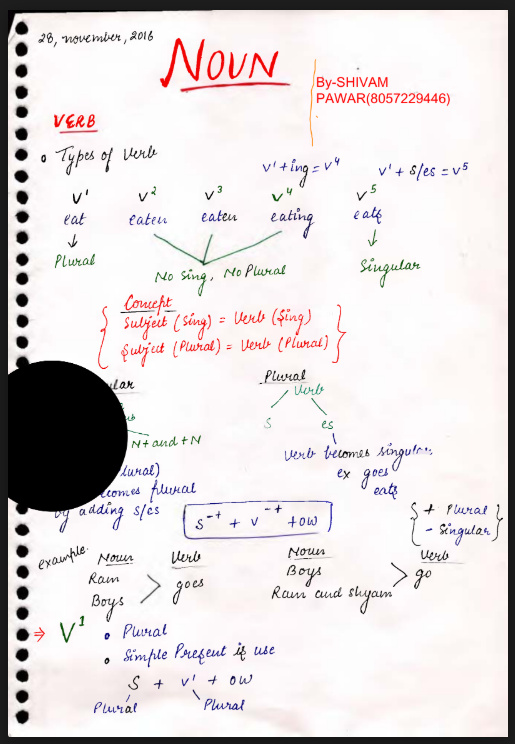
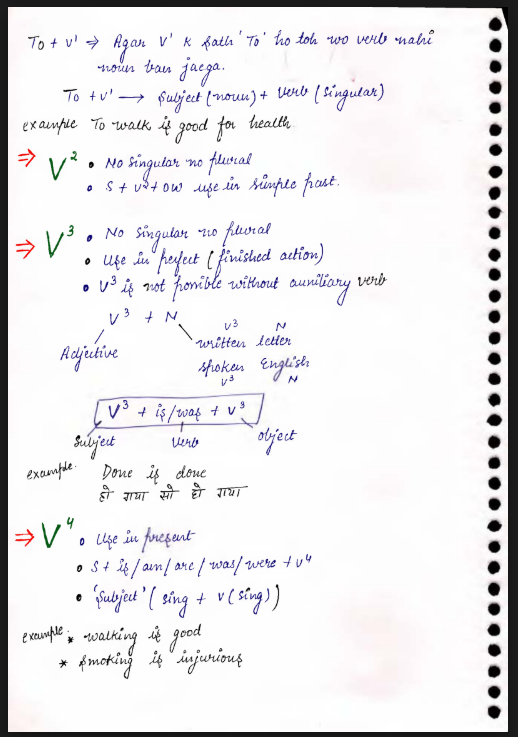

🙏 Support Our Work
We work very hard to create quality handwritten notes to support your learning journey. Every page is the result of hours of dedication and care. If you find our efforts valuable, please consider supporting us. Even a small contribution of ₹5, ₹10, ₹50, or ₹100 — whatever feels right to you — can make a big difference. Your support helps us continue this platform and keep the notes accessible to everyone. Donate securely via PhonePe – your kindness truly means a lot.

UPI ID:
(Tap to copy)
Please Donate ₹5, ₹10, ₹50, ₹100 or whatever feels right to you.
Recommended Notes from Amazon
- English Class Notes by Aman Sir – View on Amazon
- CBSE English Grammar notes – View on Amazon
- English Grammar notes by Adda247 – View on Amazon
Key Concepts: Breaking Down English Grammar
English Grammar can be vast, but for competitive exams, certain topics hold more weight. Let’s explore them with engaging explanations and examples:
1. Parts of Speech: The Building Blocks of Grammar
Think of parts of speech as the ingredients of a recipe. If you use them correctly, your sentence “dish” turns out delicious!
- Noun: A naming word (e.g., “The dog barked loudly.”)
- Pronoun: Replaces a noun (e.g., “He loves playing football.”)
- Verb: Shows action or state of being (e.g., “She runs every morning.”)
- Adjective: Describes a noun (e.g., “A beautiful sunset painted the sky.”)
- Adverb: Describes a verb (e.g., “She sings sweetly.”)
- Preposition: Shows the relationship between words (e.g., “The book is on the table.”)
- Conjunction: Connects words or sentences (e.g., “I like coffee and tea.”)
- Interjection: Expresses sudden emotion (e.g., “Wow! That’s amazing.”)
2. Tenses: Mastering Time Travel in English
Understanding tenses ensures grammatical accuracy and clarity in communication. Here’s a quick breakdown:
- Present Tense: Describes current actions (e.g., “She writes every day.”)
- Past Tense: Describes past actions (e.g., “She wrote a letter yesterday.”)
- Future Tense: Describes upcoming actions (e.g., “She will write a letter tomorrow.”)
Trick to Remember: Use time indicators like “yesterday,” “tomorrow,” or “now” to determine the correct tense.
3. Subject-Verb Agreement: The Secret to Sentence Harmony
If the subject is singular, the verb must be singular. If the subject is plural, the verb must be plural.
Example:
- Correct: The boy is playing outside.
- Incorrect: The boy are playing outside.
Pro Tip: When a phrase comes between the subject and the verb, ignore it while matching the subject and verb. (e.g., “The quality of the apples is good.”)
4. Modifiers: The Art of Clear Communication
A misplaced modifier can completely change the meaning of a sentence!
Example:
- Incorrect: “I saw a man with binoculars running through the park.”
- Correct: “I saw a man running through the park with binoculars.”
5. Active vs. Passive Voice: Choosing the Right Approach
In competitive exams, active voice is preferred for conciseness and clarity.
- Active: The teacher explained the lesson. (Concise and clear)
- Passive: The lesson was explained by the teacher. (Wordy and indirect)
Important English Grammar Formulas and Shortcuts
Though grammar is mostly rule-based, some formulas help in solving questions quickly:
- For Subject-Verb Agreement:
- Singular Subject + Singular Verb = Correct
- Plural Subject + Plural Verb = Correct
- Indefinite pronouns (everyone, someone) always take singular verbs.
- For Tense Identification:
- Present Perfect = has/have + past participle (e.g., “He has eaten.”)
- Past Perfect = had + past participle (e.g., “He had eaten before I arrived.”)
- Future Perfect = will have + past participle (e.g., “By tomorrow, he will have eaten.”)
Real-Life Examples: English Grammar in Action
Grammar is not just for exams; it plays a role in everyday communication:
- Job Interviews: Incorrect: “I done my work.” Correct: “I have done my work.”
- Emails: Incorrect: “Your welcome.” Correct: “You’re welcome.”
- Social Media: Incorrect: “There going to the party.” Correct: “They’re going to the party.”
Conclusion: Your Next Steps
Mastering English grammar takes practice, but with the right approach, you can ace competitive exams. Download our handwritten notes to reinforce your learning and get quick revision tips before your exam.
FAQs on English Grammar for Competitive Exams Handwritten Notes
Handwritten notes offer a personal touch, summarizing complex concepts in an easy-to-understand way. They are designed for quick revision before exams.
These notes cover key grammar rules, shortcuts, and examples tailored for exams. However, practicing mock tests and reading extensively will further strengthen your understanding.
Yes! The PDF is print-friendly and can be used for offline study.
Regular revision is key. Try to go through them weekly and focus more as the exam approaches.
Ready to ace grammar in your next exam? Start your journey today! 🚀
Tags:
English Grammar for Competitive Exams PDF Free download
English Grammar Handwritten Notes

