
Chapter 14: Probability Class 11 NCERT Solutions | FREE Maths Handwritten Notes PDF Download: Studycart24 is offering “Chapter 14: Probability – NCERT Class 11 Math Solutions”, Free of Cost, easily downloadable Handwritten Solutions in PDF format for offline study. They provide a well-organized approach to mastering the topic. These detailed Solutions in English are presented in a streamlined format across 23 pages; a compact size of just ~ 9 MB. In this article, you will find detailed insights about Chapter 14. Furthermore, we explore the features of these notes, provide a preview, share important topics, previously asked questions, FAQs, and useful tables to help you excel in your exam preparation.
 Join Telegram
 Join WhatsApp
| Overview | Details |
|---|---|
| Subject: | Mathematics |
| Class | 11 |
| Chapter: | 14: Probability |
| Size: | 9 MB |
| Pages | 23 |
Preview & Download Link of Probability Class 11 NCERT Solutions PDF


| Related Notes | View URL |
|---|---|
| Chapter 9: Physics Class 11 Mechanical Properties of Solids PDF Notes: FREE Download | View Here |
| Chapter 8: Class 11 Physics Gravitation Notes: FREE Handwritten Notes PDF Download | View here |
Relevant Study Materials from AMAZON
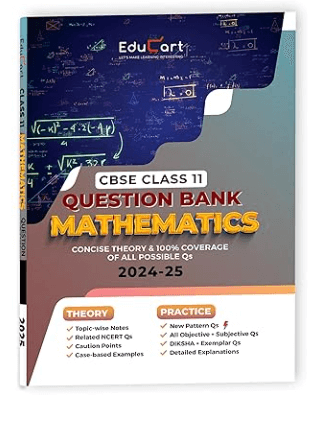
Educart CBSE Question Bank Class 11 Mathematics 2024-25 (For 2025 Board Exams)
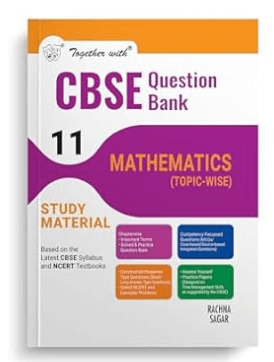
Together with CBSE Question Bank Class 11 Mathematics for 2025 Exam (Chapterwise & Topicwise)
Why Do You Need Chapter 14: Probability – Probability Class 11 NCERT Solutions?
- Clarity with Personality
Handwritten explanations feel more personal and often less intimidating—just like a friendly peer explaining concepts. That boost in confidence matters a lot when tackling probability. - Concise yet Complete
Despite being just 15 pages, the notes cover definitions, theorems, solved problems, and tips—all distilled for maximum impact without fluff. - Offline Convenience
Download once and study anytime, anywhere—no internet needed. Perfect for long bus rides, offline study hours, or relaxing under a tree. - Student‑Friendly Presentation
Colour-coded workings, margin annotations, and arrows foster memory retention and make revision enjoyable instead of dull. - Exam‑Smart Format
With previous exam patterns in mind, the notes highlight frequently tested topics and common pitfalls, giving you an edge during the actual test.
By investing a few minutes in downloading these notes, you save hours hunting down scattered solutions or unreliable sources.
🙏 Support Our Work
We work very hard to create quality handwritten notes to support your learning journey. Every page is the result of hours of dedication and care. If you find our efforts valuable, please consider supporting us. Even a small contribution of ₹5, ₹10, ₹50, or ₹100 — whatever feels right to you — can make a big difference. Your support helps us continue this platform and keep the notes accessible to everyone. Donate securely via PhonePe – your kindness truly means a lot.

UPI ID:
(Tap to copy)
Please Donate ₹5, ₹10, ₹50, ₹100 or whatever feels right to you.
How to Prepare for Chapter 14: Probability Class 11 NCERT Solutions
- Start with Definitions
Understand sample space, events, mutually exclusive events, and the classical definition of probability. Get comfortable with notation P(A), P(B). - Axioms of Probability
The three axioms are the foundation—memorize and apply them. They keep probability consistent and logical. - Addition & Complement Rules
Learn how to use P(A ∪ B) = P(A) + P(B) – P(A ∩ B) and P(A′) = 1 – P(A) effectively via solved examples. - Conditional Probability
Grasp P(A | B) = P(A ∩ B) / P(B) thoroughly. Use lots of tree diagrams for clarity. - Multiplication Theorem
Remember: P(A ∩ B) = P(A) × P(B | A), and for independent events it’s simply the product of P(A) and P(B). - Total Probability & Bayes’ Theorem
These are golden tools—learn their structure and where they apply: in medical testing, reliability analysis, and decision‑making examples. - Practice Regularly
Attempt incremental difficulty problems—from textbook to previousexam questions—to build speed and accuracy. - Use the Handwritten Notes
Refer back to the notes often. The compact explanations and margin hints keep you on track and focused. - Create Quick Reference Cards
Summarize formulas and key ideas on flashcards: addition, complement, conditional, Bayes, etc. - Teach Someone Else
Explaining to a friend, sibling, or even yourself in mirror helps reinforce concepts and reveals gaps.
Transitioning from theory to solving lots of problems is the key to success in any probability topic!
Important Topics & Formulas: Probability Class 11 NCERT Solutions
| Topic / Concept | Key Formula / Idea |
|---|---|
| Axioms of Probability | Non-negativity, normalization, additivity |
| Complement Rule | P(A′) = 1 − P(A) |
| Addition Rule (General) | P(A ∪ B) = P(A) + P(B) − P(A ∩ B) |
| Addition Rule (Mutually Exclusive) | P(A ∪ B) = P(A) + P(B) |
| Conditional Probability | P(A |
| Multiplication Rule | P(A ∩ B) = P(A) × P(B |
| Independence Criterion | P(A ∩ B) = P(A) × P(B) |
| Total Probability Theorem | If Bᵢ are exhaustive & mutually exclusive: P(A) = ∑ P(Bᵢ) P(A |
| Bayes’ Theorem | P(Bᵢ |
Previously Asked Questions from Board Exams
These are representative questions that keep appearing:
- A bag contains balls of different colors; asked to find probability without replacement.
- Events A and B given: P(A), P(B), and P(A ∪ B); compute P(A ∩ B).
- Use conditional probability in disease testing / defective items.
- Use Bayes’ theorem to determine posterior probabilities given test outcomes.
- Evaluate probability when drawing from multiple boxes or urns (total probability).
For example:
- From CBSE, Delhi Region, 2023: A factory tests components in batches; if one batch fails test, students must compute P(failure given positive/negative test reports) via Bayes’ theorem.
- From ISC, 2022: A card drawn from deck; “if it is a face card, then probability that it is a queen” -> conditional probability.
The notes have boundary‑breaking solved illustrations to nail these types.
Summary – Class 11 Maths Probability Class 11 NCERT Solutions
- Chapter 14 introduces the fundamentals of Probability—definitions, axioms, and key rules like addition and multiplication.
- You then transition into conditional probability, independence, total probability, and Bayes’ theorem.
- With diligent practice, students grasp not only formulas but also reasoning in probabilistic thinking.
- The handwritten notes from Studycart24 neatly condense these across 15 pages, combining theory, solved examples, and exam‑oriented focus.
- Their free downloadable PDF empowers revision anywhere and anytime.
In short: learn smart, revise fast, practice more—and probabilities become less scary!
More FAQs- Chapter 14: Probability – NCERT Class 11 Math Solutions
Yes! They target all key exam topics and include previous board‑style questions. Used alongside textbook problems, you’ll be thoroughly prepared.
Absolutely. The formatting is print-friendly: clear lines, legible handwriting, and minimal ink margins.
It helps. You can solve textbook exercises first, then compare your solutions with the notes to reinforce learning.
Yes—they follow NCERT Class 11 Maths Chapter 14 syllabus exactly, including the recent additions or minor modifications.
Sure—Studycart24 promotes healthy study sharing. Just ensure peers download from the genuine link to avoid corrupted files.
Useful Tables at a Glance
1. Key Formulas Table
| Formula Type | Expression |
|---|---|
| Complement | P(A′) = 1 − P(A) |
| General Addition | P(A ∪ B) = P(A) + P(B) − P(A ∩ B) |
| Mutually Exclusive | P(A ∪ B) = P(A) + P(B) |
| Conditional Probability | P(A |
| Multiplication Theorem | P(A ∩ B) = P(A) × P(B |
| Independence Condition | P(A ∩ B) = P(A) × P(B) |
| Total Probability | P(A) = Σ P(Bᵢ) × P(A |
| Bayes’ Theorem | P(Bᵢ |
2. Quick‑Look Decision Chart
- Are events disjoint? → Use mut. exclusive addition rule.
- Are they independent? → Use P(A ∩ B) = P(A) × P(B).
- Need conditional probability? → Use P(A | B).
- Multiple scenarios or partitions? → Use total probability theorem.
- Given outcome, want original event probability? → Use Bayes’ theorem.
3. Common Pitfalls to Avoid
| Mistake | Correction |
|---|---|
| Mixing up complement rule | Remember P(A′) = 1 − P(A), not + or ÷ anything. |
| Assuming independence | Don’t use P(A) × P(B) unless events are truly independent. |
| Ignoring partition of sample | For conditional probability, sample space must be B. |
| Overlooking P(A ∩ B) in union rule | Always subtract intersection if overlap exists. |
Fun Tips for Teenagers to Master Probability – NCERT Class 11 Math Solutions
- Use coins, dice, cards—play with real props!
Flip coins or draw cards with friends. Discover patterns, jot probabilities, and get a hands‑on feel. - Probability games or apps make learning interactive—see how often you get heads/tails or outcomes from many tries. It’s subtle practice disguised as fun.
- Challenge friends to quiz duels: one gives scenarios (“two draws without replacement”), the other answers probability. Keep score.
- Watch cartoons and link probability: e.g. predicting outcomes in a random event in a funny animation—turn it into a mini‑quiz.
- Use memes and doodles: draw silly characters representing events A and B, dramas about “who shows up” (intersection), and colour‑coded Venn diagrams.
- Reward yourself: solve a tough Bayes’ theorem problem? Treat your favourite snack or a 5‑minute dance break.
These fun tactics help in remembering the ideas better—and ensure you don’t dread probability anymore.
Final Thoughts Chapter 14: Probability – NCERT Class 11 Maths Solution
In conclusion, mastering Chapter 14 Probability from NCERT Class 11 becomes not just easier but enjoyable with the right tools. Studycart24’s handwritten notes give you a compact, exam-centric, and student‑friendly resource. They streamline learning, focus on core ideas, and support revision—anytime, anywhere.
So grab the PDF, practice smart, and you’ll enter the exam hall confident about probabilities and logical reasoning. Go ahead—download now and let probability problems become your academic playground!
All the best for your Class 11 preparation—may your success be as certain as P=1P = 1!
tags: Class 11 Maths NCERT Solutions,
Chapter 14 Probability Notes,
Handwritten Maths Notes,
CBSE Class 11 Maths,
Studycart24 Notes,
Probability Chapter NCERT,
Toppers Class Notes,
Boards Exam Preparation,
Competitive Exam Maths Notes,
Free Download Maths Notes,
NCERT Probability Solutions,
Class 11 Maths Handwritten PDF,
CBSE Maths Probability Chapter,
Studycart24 Handwritten Notes,
Class 11 Probability Formulas,
Maths Exam Notes for Boards,
NCERT Class 11 Maths Solutions,
Probability Chapter Notes PDF,
Class 11 Maths Study Material,
Probability Notes for Competitive Exams
Probability Class 11 NCERT Solutions,

