The end of bipolarity class 12 notes- Free Handwritten Notes PDF: Studycart24 is offering Class 12 Political Science NCERT Chapter 1 The End of Bipolarity – Free Handwritten Notes PDF, free of cost, easily downloadable, and available in a PDF format for offline study. These notes present a well-organized approach to mastering Political Science concepts. Designed in a streamlined format across 15 pages and a compact size of just a few MBs, they are easy to store, revise, and carry. In this article, you will find detailed insights into Chapter 1 The End of Bipolarity. Furthermore, we provide free notes, highlight important topics, share previously asked questions, include MCQs, answer FAQs, and give useful tips for retaining information. You will also learn how to study like a topper, preview and download the notes, and prepare systematically for this chapter.
 Join Telegram
 Join WhatsApp
| Details | Information |
|---|---|
| Chapter: | The End of Bipolarity |
| Subject: | Political Science (Contemporary World Politics) |
| Size: | 10 MB |
| Pages: | 11 |
| Format: | PDF (Scroll down below) |
Preview & Download Link – Class 12 Political Science NCERT Chapter 1 The End of Bipolarity – Free Handwritten Notes PDF


| Related Notes from Studycart.com | URL |
|---|---|
| Chapter 4: Primary Activities Class 12 Notes – Class 12th Geography | View Here |
| Chapter 5: Secondary Activities Class 12 Notes – Class 12th Geography | View Here |
Study Aid Materials from AMAZON
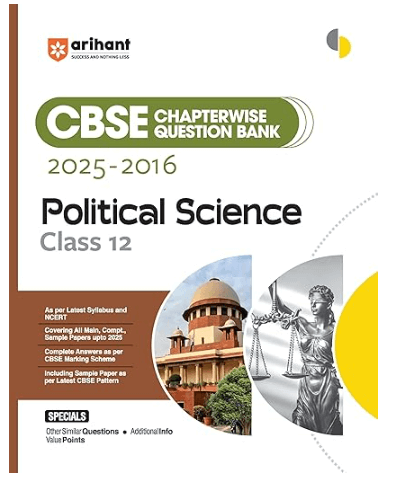
Arihant CBSE Chapterwise Question Bank 2025–2016 for Class 12 Political Science | Latest Syllabus | Includes Solved Papers, Sample Papers, and CBSE Marking Scheme
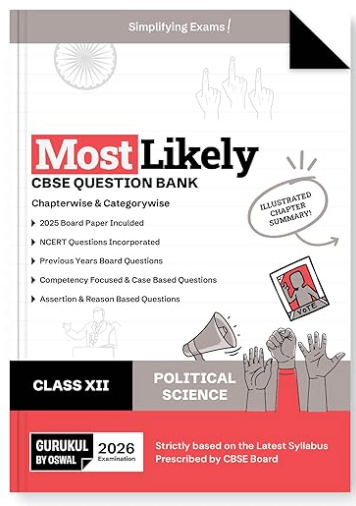
Gurukul By Oswal Political Science Most Likely CBSE Question Bank for Class 12 Exam 2026 – Chapterwise & Categorywise, Competency Qs, NCERT Qs, Case, Assertion & Reasoning, Previous Years’ Board Qs
Importance of Class 12 Political Science NCERT Chapter 1 The End of Bipolarity
Political Science at the Class 12 level builds a strong foundation for understanding world politics, international relations, and India’s role in global affairs. A large portion of this subject revolves around critical historical events and their influence on the present-day world order. Handwritten notes are particularly valuable because they summarize lengthy explanations into concise points, making revision faster and more effective. Instead of flipping through multiple reference books, you get all the important material in one place. Moreover, such notes reduce exam anxiety as they provide structured information tailored for quick learning.
🙏 Support Our Work
We work very hard to create quality handwritten notes to support your learning journey. Every page is the result of hours of dedication and care. If you find our efforts valuable, please consider supporting us. Even a small contribution of ₹5, ₹10, ₹50, or ₹100 — whatever feels right to you — can make a big difference. Your support helps us continue this platform and keep the notes accessible to everyone. Donate securely via PhonePe – your kindness truly means a lot.

UPI ID:
(Tap to copy)
Please Donate ₹5, ₹10, ₹50, ₹100 or whatever feels right to you.
Overview of Chapter 1 The End of Bipolarity
This chapter deals with the transformation of world politics after the disintegration of the Soviet Union in 1991. The Cold War era, dominated by the bipolar rivalry between the USA and the USSR, came to an end, giving rise to new dynamics. The chapter explains the collapse of the Soviet system, the consequences for Eastern Europe, and the emergence of unipolarity dominated by the United States. It also highlights Russia’s transformation, China’s economic rise, and India’s positioning in this new global order.
Key Themes Covered in the Chapter:
- Disintegration of the USSR and its consequences.
- Political and economic transformation of Russia.
- Transition from socialism to democracy and capitalism.
- The emergence of unipolarity led by the USA.
- Rise of China and India in the post-Cold War world.
- Relevance of NAM (Non-Aligned Movement) in the new context.
Free Handwritten Notes PDF – Features
The handwritten notes for this chapter are carefully structured with the following highlights:
- Concise explanations of long concepts.
- Diagrams, charts, and flowcharts for quick visualization.
- Important definitions and treaties listed separately.
- Bullet points for easy recall.
- Exam-focused summaries to cover maximum syllabus in minimal time.
These notes are presented in an attractive format, making study sessions less stressful and more productive.
How to Study Like a Topper
Top-performing students in Political Science don’t just read, they strategize. Here are some effective ways to approach this chapter:
- Break down complex topics into smaller sections. For example, study the fall of the Soviet Union separately from the rise of unipolarity.
- Make comparative tables to remember differences, such as comparing the USSR system with democratic capitalism.
- Highlight key terms like Perestroika, Glasnost, NATO, and Warsaw Pact.
- Write short answers regularly to practice presenting ideas within word limits.
- Link theory with current affairs to make answers more analytical.
- Revise multiple times instead of reading once. Consistency is the secret to retaining Political Science concepts.
Important Topics in Chapter 1 The End of Bipolarity
Students must pay special attention to the following:
- Causes of the Soviet Union’s disintegration.
- Role of Mikhail Gorbachev’s reforms (Perestroika and Glasnost).
- Transition of Russia to a democratic political system.
- Challenges faced by post-Soviet countries.
- Impact of unipolarity on world politics.
- Relevance of NAM in the new world order.
- India’s foreign policy response after the Cold War.
Previously Asked Questions
Board examinations often include both short and long-answer questions from this chapter. Some examples are:
- State two major reasons for the disintegration of the Soviet Union.
- What were the consequences of Gorbachev’s reforms?
- Explain the meaning of unipolarity with examples.
- Discuss the relevance of NAM after the end of the Cold War.
- How did India respond to the unipolar world?
Answering these questions in a structured manner increases your chances of scoring high.
Multiple Choice Questions (MCQs)
Practicing MCQs helps strengthen memory. Here are some examples:
- The Soviet Union disintegrated in:
- a) 1985
- b) 1989
- c) 1991
- d) 1993
- Who introduced the policies of Perestroika and Glasnost?
- a) Lenin
- b) Stalin
- c) Gorbachev
- d) Brezhnev
- NAM stands for:
- a) Non-Aligned Movement
- b) National Asian Movement
- c) New Alliance of Members
- d) None of these
- The world order after the Cold War became:
- a) Bipolar
- b) Unipolar
- c) Multipolar
- d) Colonial
- Which country emerged as the only superpower after 1991?
- a) Russia
- b) USA
- c) China
- d) India
FAQs on The End of Bipolarity
It refers to the collapse of the USSR and the end of Cold War rivalry, resulting in the USA becoming the only superpower.
Due to political inefficiency, economic crisis, excessive military expenditure, and unsuccessful reforms like Perestroika and Glasnost.
The world moved towards unipolarity under the USA, with globalization, liberalization, and new power centers emerging.
India adapted by liberalizing its economy, strengthening ties with the USA, while maintaining relations with Russia and other powers.
Yes, because developing countries still require a collective platform to address global inequalities.
How to Prepare for Class 12 Political Science NCERT Chapter 1 The End of Bipolarity
Preparation becomes easier if you follow these steps:
- Read NCERT thoroughly: Build basic conceptual clarity.
- Underline keywords: Mark important terms, treaties, and reforms.
- Refer to handwritten notes: Use them for revision instead of bulky textbooks.
- Practice previous year questions: Familiarize yourself with exam patterns.
- Revise regularly: Small revision sessions ensure long-term memory retention.
- Stay updated: Relating content with modern world politics enhances understanding.
Final Tips to Score High in Political Science
- Always write answers in a structured format.
- Use headings, subheadings, and bullet points while presenting answers.
- Incorporate current examples to show analytical thinking.
- Revise important terms daily.
- Balance theoretical learning with answer writing practice.
Conclusion
The chapter The End of Bipolarity explains one of the most significant transitions in world history. Understanding the fall of the Soviet Union, the rise of unipolarity, and India’s adaptive strategies is crucial for scoring well in Class 12 Political Science. With Studycart24’s free handwritten notes PDF, students get a compact yet detailed study material to revise effectively. By practicing MCQs, solving previous questions, and following topper strategies, you can confidently master this chapter. Download the notes today and take a step closer to achieving excellent results.
Tags: Class 12 Political Science Chapter 1 The End of Bipolarity,
Contemporary World Politics Class 12 NCERT,
Political Science Part 1 Class 12 Notes,
NCERT Class 12 Political Science The End of Bipolarity Summary,
CBSE Class 12 Political Science Handwritten Notes,
Studycart24 Free Handwritten Notes PDF,
Toppers Class Notes Political Science Class 12,
Class 12 CBSE Exams Political Science Notes,
NCERT Solutions for Class 12 Political Science The End of Bipolarity,
Download Free Handwritten PDF Class 12 Political Science