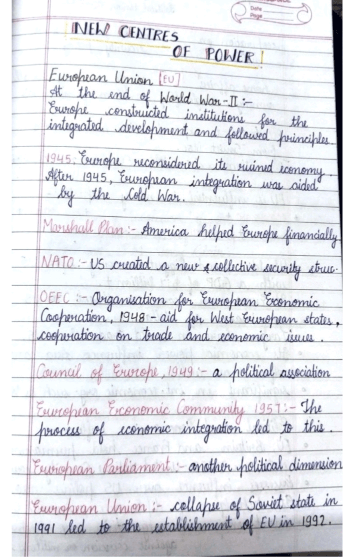
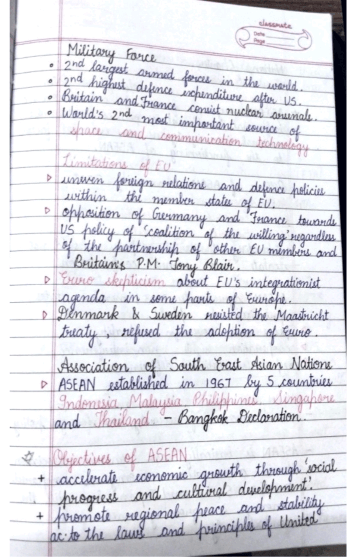
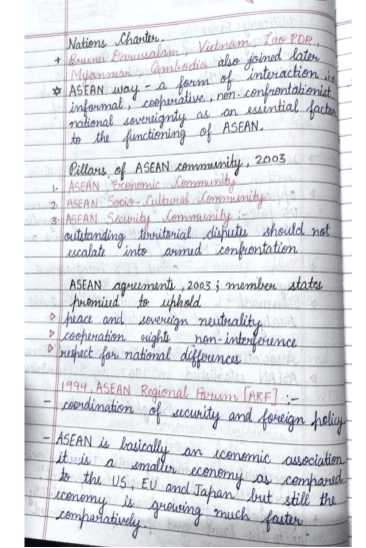
Studycart24 is offering Class 12 Political Science NCERT Chapter 2 Contemporary Centres of Power – Free Handwritten Notes PDF, free of cost, easily downloadable, and designed in a PDF format for offline study. These notes provide a well-organized approach to mastering Political Science concepts. Presented in a streamlined format across 15 pages with a compact size of just a few MBs, they make revision simple and effective. In this article, you will find detailed insights into Chapter 2 Contemporary Centres of Power, along with handwritten notes, important topics, previously asked questions, MCQs, FAQs, and practical strategies to retain information. You will also learn how to study like a topper, preview and download the notes, and prepare effectively for this chapter.
 Join Telegram
 Join WhatsApp
| Details | Information |
|---|---|
| Chapter: | Contemporary Centers of Power |
| Subject: | Political Science (Contemporary World Politics) |
| Size: | 16 MB |
| Pages: | 19 |
| Format: | PDF (Scroll down below) |
Preview & Download Link – Class 12 Political Science NCERT Chapter 2 Contemporary Centers of Power – Free Handwritten Notes PDF
| Related Notes from Studycart.com |
|---|
| Class 12 Political Science NCERT Chapter 1 The End of Bipolarity – Free Handwritten Notes PDF |
| Free Class 12 Notes |
Study Aid Materials from AMAZON
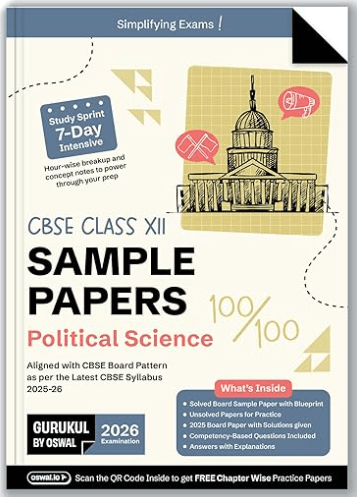
Gurukul By Oswal Political Science Sample Papers CBSE Class 12 Board Exam 2026 : Fully Solved New SQP 2025-26, Solved Sample Papers, Unsolved Sample Papers, Board Solved Paper 2025, Latest Syllabus
Gurukul By Oswal Political Science Sample Papers CBSE Class 12 Board Exam 2026 : Fully Solved New SQP 2025-26, Solved Sample Papers, Unsolved Sample Papers, Board Solved Paper 2025, Latest Syllabus Paperback
Importance of Class 12 Political Science Notes
Class 12 is a crucial year for CBSE students, and Political Science plays a significant role in board exams as well as competitive examinations. Having well-structured notes makes preparation easier and more focused. Rather than going through the entire NCERT book repeatedly, concise handwritten notes help in grasping core ideas quickly. Furthermore, these notes are crafted in alignment with the NCERT curriculum, ensuring students don’t miss out on any vital point.
🙏 Support Our Work
We work very hard to create quality handwritten notes to support your learning journey. Every page is the result of hours of dedication and care. If you find our efforts valuable, please consider supporting us. Even a small contribution of ₹5, ₹10, ₹50, or ₹100 — whatever feels right to you — can make a big difference. Your support helps us continue this platform and keep the notes accessible to everyone. Donate securely via PhonePe – your kindness truly means a lot.

UPI ID:
(Tap to copy)
Please Donate ₹5, ₹10, ₹50, ₹100 or whatever feels right to you.
Overview of Chapter 2 Contemporary Centres of Power
This chapter focuses on the global shift of power post-Cold War. It highlights how new political and economic entities emerged to balance the dominance of the United States. Institutions like the European Union (EU), ASEAN, and organizations such as BRICS are covered in detail. The chapter also explores the role of China as an economic superpower and Japan’s influence in global politics. Understanding these concepts is essential to analyze the changing structure of world politics in the 21st century.
Key Themes Covered in the Chapter:
- European Union as an economic and political power.
- The rise of ASEAN as a regional organization.
- Japan and China as emerging economies.
- India’s role in balancing contemporary centres of power.
- Shifts in world order after the Cold War.
Free Handwritten Notes PDF – Features
The handwritten notes are designed with clarity and precision. They include:
- Well-structured definitions and explanations.
- Diagrams and charts to visualize concepts.
- Key terms highlighted for easy recall.
- Important topics summarized in bullet points.
- Compact and exam-focused language.
These features make the notes an ideal companion for students preparing for board exams.
How to Study Like a Topper
Studying Political Science is not about memorization alone. Toppers adopt smart strategies to master the subject:
- Understand the concepts: Instead of rote learning, focus on why events happened and how they shaped world politics.
- Use notes effectively: Revise from handwritten notes regularly. Keep short summaries for last-minute revisions.
- Practice writing answers: Structure your answers with an introduction, explanation, and conclusion. Highlight keywords.
- Analyze previous year papers: This helps in identifying frequently asked questions.
- Stay consistent: Regular study and revision prevent last-minute stress.
Important Topics in Chapter 2 Contemporary Centres of Power
Here are the essential topics students must focus on:
- Features of the European Union.
- Role of ASEAN in regional stability.
- Japan’s rise as an economic power.
- China’s global influence.
- India’s foreign policy in a multipolar world.
- Key differences between Cold War era and contemporary world order.
Previously Asked Questions
Over the years, CBSE has frequently asked questions from this chapter. Some examples include:
- Describe the role of the European Union in world politics.
- Explain the significance of ASEAN as an alternative centre of power.
- Highlight the role of China in the world economy.
- Compare Japan and China as economic powers.
Practicing such questions ensures confidence during exams.
Multiple Choice Questions (MCQs)
MCQs are an important part of Class 12 Political Science preparation. Here are a few sample questions:
- Which of the following is not a member of ASEAN?
- a) Singapore
- b) Thailand
- c) Japan
- d) Malaysia
- The European Union was established by:
- a) Maastricht Treaty
- b) Kyoto Protocol
- c) Geneva Agreement
- d) Paris Accord
- China joined the WTO in:
- a) 1995
- b) 2001
- c) 2003
- d) 2010
- ASEAN was established in the year:
- a) 1965
- b) 1967
- c) 1970
- d) 1972
FAQs on Contemporary Centres of Power
The EU has a strong economy, a common currency (Euro), and political influence, making it a significant player in world politics.
ASEAN works on economic, political, and cultural collaboration, ensuring peace and stability in Southeast Asia.
India actively participates in regional groupings, balances relations with global powers, and supports multipolarity.
China’s rapid economic growth, manufacturing dominance, and military modernization have reshaped global power dynamics.
How to Prepare for Class 12 Political Science- Chapter 2 Contemporary Centers of Power
Preparation becomes effective when you break it into steps:
- Read the NCERT chapter thoroughly – Get conceptual clarity.
- Highlight important sections – Mark definitions, examples, and treaties.
- Use handwritten notes for revision – Focus on diagrams and charts.
- Solve practice questions – Write short and long answers.
- Attempt previous year papers – Analyze the pattern of questions.
- Revise regularly – Small, consistent revision sessions help retain information longer.
Final Tips to Score High in Political Science
- Revise notes multiple times.
- Write answers with clarity and logical flow.
- Use diagrams wherever possible.
- Manage time during the exam by attempting easier questions first.
- Stay updated on current affairs, as they strengthen your answers.
Conclusion
Mastering Class 12 Political Science Chapter 2 Contemporary Centers of Power requires conceptual clarity and organized preparation. With Studycart24’s free handwritten notes PDF, students get a ready-made resource for effective revision. These notes simplify complex topics, provide quick summaries, and save precious study time. By following the topper’s strategies, practicing important questions, and revising consistently, students can confidently aim for full marks in this chapter. Download the notes today and take the first step towards smart preparation.
Tags: Class 12 Political Science Chapter 2 Contemporary Centres of Power,
Contemporary World Politics Class 12 NCERT Notes,
Political Science Part 1 Class 12 Contemporary Centres of Power,
NCERT Class 12 Political Science Contemporary Centres of Power Summary,
CBSE Class 12 Political Science Handwritten Notes PDF,
Studycart24 Free Handwritten Notes Class 12 Political Science,
Toppers Class Notes Political Science Chapter 2 Class 12,
Class 12 CBSE Exams Political Science Chapter 2 Notes,
NCERT Solutions for Class 12 Political Science Contemporary Centres of Power,
Download Free Handwritten PDF Class 12 Political Science Chapter 2