Childhood Class 11 Questions and Answers PDF – Free Download: Studycart24 is offering Class 11 English Hornbill Question Answers – Poem 4: Childhood , Free of Cost, easily downloadable Handwritten Notes in a PDF Format for offline study, and a well-organized approach to mastering concepts. These detailed notes in English are presented in a streamlined format across 4 pages, with a compact size of just a few 5 MB making them lightweight and ideal for revisions. In this article, you will find detailed insights into Poem 4: Childhood by Markus Natten. Furthermore, we explore the summary of the poem, highlight important topics, present previously asked questions, provide FAQs, and share useful tips for retaining concepts effectively.
 Join Telegram
 Join WhatsApp
| Info | Details |
|---|---|
| Chapter | Poem 4: Childhood |
| Subject | English |
| Pages | 4 |
| Size | 5 MB |
| Format |
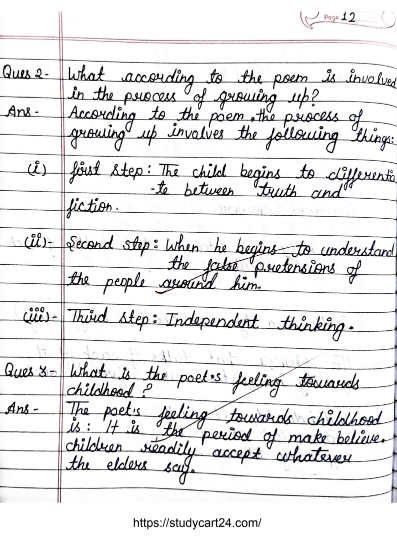
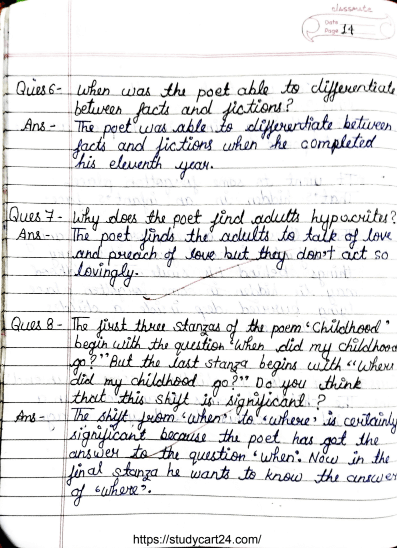
Preview and Download Link of Poem 4: Childhood Handwritten Question Answers PDF

Related Notes from Studycart24.com for Class 11th
- Physics Class 11 Notes
- Chemistry Class 11 Notes
- Mathematics Class 11 Notes
- Biology Class 11 Notes
- Computer Science Class 11 Notes
- Mathematics Class 11 Notes
- Physical Education Class 11 Notes
Booster Materials from AMAZON
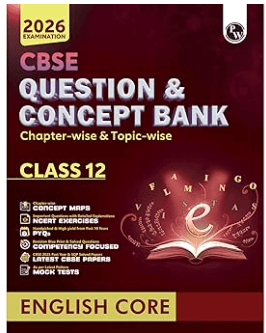
PW CBSE Question & Concept Bank (QCB) Class 12 English Core Chapter-wise and Topic-wise Solved Questions For 2026 Exams with 50% Competency Based Question [Paperback] PW
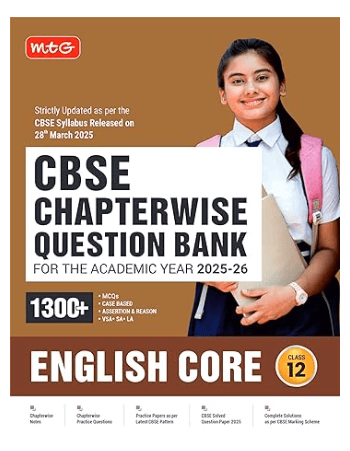
MTG CBSE Chapterwise Question Bank Class 12 English Core For 2026 Board Exam | As Per Latest CBSE Syllabus Released on 28 March 2025
🙏 Support Our Work
We work very hard to create quality handwritten notes to support your learning journey. Every page is the result of hours of dedication and care. If you find our efforts valuable, please consider supporting us. Even a small contribution of ₹5, ₹10, ₹50, or ₹100 — whatever feels right to you — can make a big difference. Your support helps us continue this platform and keep the notes accessible to everyone. Donate securely via PhonePe – your kindness truly means a lot.

UPI ID:
(Tap to copy)
Please Donate ₹5, ₹10, ₹50, ₹100 or whatever feels right to you.
About the Poem – Childhood Class 11 Questions and Answers PDF
Childhood by Markus Natten is a reflective and philosophical poem included in the Class 11 Hornbill English textbook. The poem explores a significant question: When does a child cease to be a child? Through its lines, the poet ponders over the loss of innocence, curiosity, and imagination that characterize childhood.
The poet identifies three possible stages of losing childhood:
- When one realizes that heaven and hell are not physically located.
- When one understands that adults often fail to practice what they preach.
- When one gains individuality and develops a sense of rational thinking.
Ultimately, the poet concludes that while childhood may disappear, innocence remains hidden in the child’s face. This makes the poem both nostalgic and thought-provoking.
Summary of Childhood
The poem opens with the poet questioning when his childhood ended. He recalls discovering that the abstract ideas of heaven and hell cannot be located geographically, which marks the loss of innocence. Later, he realizes that adults often indulge in hypocrisy—they preach love but fail to practice it. This realization pushes him further into adulthood. Finally, he notices his own individuality, his ability to think independently and differentiate between right and wrong.
Thus, the poem suggests that childhood is lost gradually, not suddenly. While innocence disappears, its traces linger in children’s faces, reminding us of purity.
Stanza-Wise Explanation
First Stanza:
- Poet wonders when his childhood disappeared.
- He recalls the moment when he realized heaven and hell cannot be located on maps.
Second Stanza:
- Another stage of loss is identified: discovering that adults are hypocritical.
- They preach love and kindness but fail to follow it.
Third Stanza:
- The poet finds that childhood ends when one gains individuality.
- Rationality and independent thought replace blind innocence.
Fourth Stanza:
- Childhood is not gone completely; innocence is still visible in children’s faces.
- Purity continues to exist in the world, though adulthood often overshadows it.
This stanza-wise breakdown is often asked in exams, making it essential for preparation.
How to Study Like a Topper
Toppers usually take a balanced approach while preparing for literature. Here are practical strategies you can adopt:
- Understand, Don’t Memorize: Instead of rote learning, focus on the core meaning of each stanza.
- Use Handwritten Notes: Concise, well-organized notes save time during revision.
- Practice with Past Papers: Write answers from previous exams to familiarize yourself with expected patterns.
- Highlight Literary Devices: Alliteration, imagery, and symbolism must be identified while revising.
- Compare Poems: Link Childhood with other Hornbill poems (e.g., A Photograph and The Voice of the Rain) to build conceptual connections.
By following these topper strategies, you ensure deeper understanding and better retention.
How to Prepare for Poem 4: Childhood
Preparation for this poem requires a structured plan:
- Read the Poem Multiple Times – Each reading brings new insights.
- Mark Key Lines – Sentences like “When did my childhood go?” are often quoted in exams.
- Frame Your Own Answers – Teachers appreciate originality more than textbook-style answers.
- Create Mind Maps – Summarize themes and literary devices in visual charts.
- Revise Frequently – Short, regular revisions are more effective than one long session.
Important Topics and Literary Devices in Poem 4: Childhood
- Themes:
- Loss of innocence.
- Hypocrisy of adults.
- Self-awareness and individuality.
- Persistence of innocence in children.
- Tone: Reflective, questioning, and nostalgic.
- Literary Devices:
- Rhetorical Questions – Repeatedly asking “When did my childhood go?”
- Alliteration – “Cease to be a child.”
- Imagery – Childhood innocence captured in children’s faces.
- Symbolism – Childhood = innocence, adulthood = awareness.
Important Formulas and Memory Tricks
Even though English literature does not use mathematical formulas, tricks and acronyms can be powerful tools:
- “HIP” → Heaven, Hypocrisy, Individuality, Purity (four stages discussed in the poem).
- “RAIL” → Realization, Adults, Individuality, Loss.
Such devices simplify revision and help recall points quickly in exams.
Previously Asked Questions from Poem 4: Childhood
- What realization marks the end of childhood according to Markus Natten?
- How does the poet contrast children with adults?
- Write the central idea of the poem Childhood.
- Why does the poet say childhood is hidden in a child’s face?
- Discuss the three stages at which childhood is lost.
Since these questions have been repeated across CBSE board exams, they should be practiced thoroughly.
More FAQs on Childhood Class 11 Questions and Answers PDF
They are handwritten for easy readability and structured learning.
It spans 4 pages, concise yet detailed.
They are great for revision but should be used alongside NCERT textbooks.
Yes, Studycart24 provides it free for all students.
Extremely useful as they focus only on important questions and summaries.
Tables for Quick Learning
| Element | Details from Childhood |
|---|---|
| Poet | Markus Natten |
| Central Theme | Loss of innocence, awareness |
| Tone | Reflective, nostalgic |
| Key Literary Devices | Rhetorical question, imagery, alliteration |
| Key Questions | Stages of losing childhood |
Final Thoughts – Childhood Class 11 Questions and Answers PDF
Poem 4: Childhood by Markus Natten is not just a poem about growing up; it is a philosophical reflection on innocence, maturity, and individuality. Students preparing for Class 11 English Hornbill exams must understand the deeper meaning rather than just memorizing summaries.
The free handwritten notes PDF from Studycart24 makes preparation easier, quicker, and more focused. With stanza-wise explanations, key literary devices, and frequently asked questions, these notes provide the perfect companion for both class tests and board exams.
By combining structured notes, regular revision, and toppers’ strategies, you can master this chapter with ease. Download the PDF today, and step into exams with clarity and confidence.
Tags:
Class 11 English Hornbill Poem 4 Childhood Question Answers,
Childhood Poem Class 11 English Hornbill Notes,
Class 11 English Hornbill Poem 4 NCERT Solutions PDF,
CBSE Class 11 English Hornbill Poem Handwritten Notes,
Studycart24 Class 11 English Handwritten Poem Notes,
Class 11 English Hornbill Childhood Question Answer Handwritten PDF,
Toppers Class Notes for Class 11 English Poem Childhood,
Class 11 CBSE Exams English Hornbill Poem 4 Childhood,
NCERT Solutions Childhood Poem Class 11 English Notes,
Download Free Handwritten PDF Class 11 English Hornbill Poem,
Class 11 English Hornbill Poem 4 Childhood Handwritten Solutions,
CBSE Board Exam English Hornbill Poem Childhood Notes,
Class 11 English Handwritten Notes for CBSE Poem 4,
Best Notes for Class 11 English Hornbill Poems Studycart24,
Childhood Poem Summary and Question Answers Class 11
Childhood Class 11 Questions and Answers PDF