
Chapter 13: Probability Class 12 Solutions PDF, Class 12 NCERT Solutions PDF, Free Handwritten Notes PDF Download in Hindi and English – Probability is one of the most significant concepts in mathematics, widely used in statistics, data analysis, and various real-life applications. Chapter 13 of Class 12 NCERT Mathematics explores advanced concepts of probability, building on what students learned in earlier classes. It introduces conditional probability, Bayes’ theorem, independent and dependent events, and random variables, along with their applications in solving complex problems. These topics help students develop logical reasoning and analytical skills, which are crucial for competitive exams like JEE, CUET, and other entrance tests.
 Join Telegram
 Join WhatsApp
The NCERT Solutions for this chapter provide step-by-step explanations for all the exercises, making it easier to grasp even the most challenging problems. By practicing these solutions, students can strengthen their conceptual understanding and enhance their problem-solving speed and accuracy. These solutions are designed according to the latest CBSE guidelines, ensuring complete preparation for board exams. Probability also lays a strong foundation for higher studies in fields like mathematics, economics, and data science. Hence, mastering this chapter is essential for scoring well and applying these concepts in real-life situations effectively.
Preview of Chapter 13: Probability Class 12 Solutions PDF – Free Handwritten Notes PDF Download in Hindi
Images of Class 12 Math’s Chapter 13 Probability Free Handwritten Notes PDF Download in Hindi


Related Free Notes from Studycart24.com of Class 12
- Class 12 Biology Handwritten Notes PDF Free Download- StudyCart24.com
- Class 12 Business Studies Notes: FREE Notes Chapter 1 to 12
- Complete Class 12 Chemistry Notes PDF with All Chapters for Free
- Class 12 Computer Science Notes PDF in English Free Download
- Class 12 Geography Notes: Download Free PDF of All Chapters in English
- Class 12 Physics Handwritten Notes in English PDF Download
🙏 Support Our Work
We work very hard to create quality handwritten notes to support your learning journey. Every page is the result of hours of dedication and care. If you find our efforts valuable, please consider supporting us. Even a small contribution of ₹5, ₹10, ₹50, or ₹100 — whatever feels right to you — can make a big difference. Your support helps us continue this platform and keep the notes accessible to everyone. Donate securely via PhonePe – your kindness truly means a lot.

UPI ID:
(Tap to copy)
Please Donate ₹5, ₹10, ₹50, ₹100 or whatever feels right to you.
Suggested Notes Links from Amazon Related to Class 12 Math’s Handwritten Notes
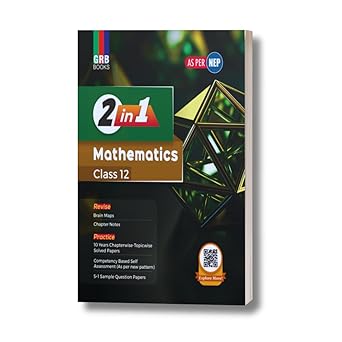
GRB 2 in 1 – Mathematics Question Bank For Class 12 || Revise + Practice || Includes Chapterwise Competency Based Questions & latest CBSE Sample Question Paper || For CBSE 2026 Board Exam.
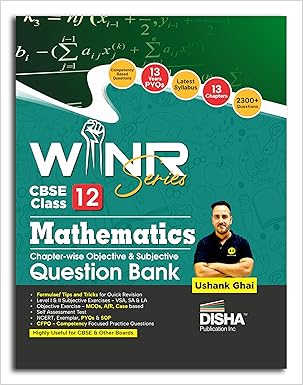
Disha WINR Series CBSE Class 12 Mathematics Chapter-wise Objective & Subjective Question Bank| NCERT, Exemplar, PYQs & SQP |Competency (CFPQ) Questions| Book by Ushank Ghai For 2026 Exam
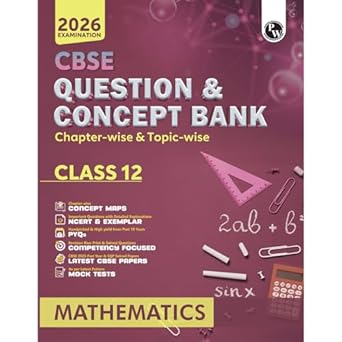
PW CBSE Question & Concept Bank (QCB) Class 12 Mathematics Chapter-wise and Topic-wise Solved Questions For 2026 Exams with 50% Competency Based Question
Key Features of Class 12 Math’s Chapter 13 Probability Free Handwritten Notes PDF Download in Hindi
- Subject: Maths (2 Math’s Chapter 13 Probability )
- Language : Hindi
- Total pages : 59
- File size: 17.2 MB
- Format : PDF
- Well structured and easy to understand
- Includes importance formulas and definitions
- Covers all NCERT syllabus topics
- Useful for quick revision before exam
Definition of Probability Chapter 13 Class 12 Math’s
Probability is a branch of mathematics that deals with measuring the likelihood or chance of an event occurring. It provides a numerical value between 0 and 1 to express how likely an event is to happen, where 0 means the event is impossible and 1 means the event is certain.
In Class 12, probability goes beyond basic concepts and includes conditional probability, independent events, and Bayes’ theorem. These concepts help in analyzing situations where outcomes depend on specific conditions or prior events.
Mathematically, for an event EEE in a sample space SSS: P(E)=Number of favourable outcomesTotal number of outcomes in SP(E) = \frac{\text{Number of favourable outcomes}}{\text{Total number of outcomes in } S}P(E)=Total number of outcomes in SNumber of favourable outcomes
where 0≤P(E)≤10 \leq P(E) \leq 10≤P(E)≤1.
Do you want me to list 15 important definitions from Chapter 13 (like conditional probability, independent events, random variables, Bayes’ theorem, etc.)? It will help in quick revision.
10 Important Definitions from Class 12 Math’s Chapter 13 – Probability
1. Probability:
The measure of the likelihood of an event occurring, defined as P(E)=Number of favourable outcomesTotal number of outcomesP(E) = \frac{\text{Number of favourable outcomes}}{\text{Total number of outcomes}}P(E)=Total number of outcomesNumber of favourable outcomes.
2. Random Experiment:
An experiment whose outcomes cannot be predicted with certainty in advance.
3. Sample Space (S):
The set of all possible outcomes of a random experiment.
4. Event:
A subset of the sample space. If the outcome of an experiment belongs to this subset, the event is said to occur.
5. Independent Events:
Two events are independent if the occurrence of one does not affect the occurrence of the other.
6. Conditional Probability:
The probability of an event occurring given that another event has already occurred, denoted as P(A∣B)P(A|B)P(A∣B).
7. Total Probability Theorem:
If events E1,E2,…,EnE_1, E_2, …, E_nE1,E2,…,En are mutually exclusive and exhaustive, then for any event A, P(A)=∑i=1nP(Ei)P(A∣Ei)P(A) = \sum_{i=1}^{n} P(E_i) P(A|E_i)P(A)=i=1∑nP(Ei)P(A∣Ei)
8. Bayes’ Theorem:
A formula to find the probability of a cause given an observed event: P(Ek∣A)=P(Ek)P(A∣Ek)∑i=1nP(Ei)P(A∣Ei)P(E_k|A) = \frac{P(E_k) P(A|E_k)}{\sum_{i=1}^{n} P(E_i) P(A|E_i)}P(Ek∣A)=∑i=1nP(Ei)P(A∣Ei)P(Ek)P(A∣Ek)
9. Mutually Exclusive Events:
Events that cannot occur simultaneously.
10. Exhaustive Events:
A collection of events is exhaustive if they together cover all possible outcomes of the sample space.
How to Prepare for Class 12 Math’s Chapter 13 – Probability
Preparing for Probability requires a balance of conceptual understanding and consistent practice. Here’s how you can master this chapter:
1. Understand Basic Concepts First:
Revise the fundamental concepts of probability from Class 11, like events, sample space, and simple probability.
2. Focus on Conditional Probability:
Give extra attention to conditional probability and its applications—it forms the core of this chapter.
3. Learn Theorems Thoroughly:
Understand and memorize Bayes’ Theorem and the Total Probability Theorem along with their proofs and uses.
4. Practice All NCERT Examples:
Do not skip any example problems; they help in grasping complex concepts easily.
5. Solve Exercise Problems:
Attempt all NCERT exercise questions (including miscellaneous). They often appear in board exams.
6. Use Short Notes:
Prepare short notes of formulas and key definitions for quick revision before exams.
7. Work on Word Problems:
Practice real-life application-based problems to strengthen your analytical thinking.
8. Time-bound Practice:
Solve previous year questions within a fixed time to improve speed and accuracy.
9. Clear Doubts Regularly:
Do not leave any concept unclear; get help from teachers or solutions.
10. Revise Frequently:
Keep revisiting formulas, theorems, and tricky problems to retain them longer.
Chapter & Subtopics list for Class 12 Maths Chapter 13 – Probability
1. Introduction
- Importance of probability in real life
- Recap of basic concepts from Class 11
2. Conditional Probability
- Definition & concept
- Properties of conditional probability
3. Multiplication Theorem on Probability
- Theorem & applications
- Independent events vs dependent events
4. Independent Events
- Definition & examples
- Difference between independent & mutually exclusive events
5. Bayes’ Theorem
- Statement of the theorem
- Derivation and applications
- Solving real-life problems using Bayes’ Theorem
6. Random Variables & Their Probability Distributions
- Definition of random variables
- Probability distribution of a random variable
7. Bernoulli Trials & Binomial Distribution
- Bernoulli trials and their properties
- Binomial distribution: definition, mean & variance
8. Miscellaneous Examples & Problems
- Combined problems using different theorems
- Application-based questions
Why These Handwritten Notes Are Special for You?
| 1 | Written in simple and student-friendly language for better understanding. |
| 2 | All important definitions (like conditional probability, Bayes’ theorem, etc.) compiled at one place. |
| 3 | Step-by-step explanations for each concept. |
| 4 | Key formulas highlighted for quick revision. |
| 5 | Includes diagrams & flowcharts to make concepts easier. |
| 6 | Board exam-focused with frequently asked questions marked. |
| 7 | Solved NCERT examples explained in detail. |
| 8 | Extra important problems added for more practice. |
| 9 | Short tricks & tips for solving probability problems quickly. |
| 10 | Covers all subtopics: Conditional Probability, Bayes’ Theorem, Binomial Distribution, etc. |
| 11 | One-stop solution – no need to refer to multiple books. |
| 12 | Color-coded highlights for key points (in handwritten style). |
| 13 | Chapter-wise weightage insights for board exams. |
| 14 | Compact and concise for fast revision. |
| 15 | Step-by-step proofs for theorems and properties. |
| 16 | Real-life examples to connect theory with applications. |
| 17 | Miscellaneous problems solved for advanced understanding. |
| 18 | Time-saving notes for last-minute revision. |
| 19 | Well-organized format for easy learning. |
| 20 | Prepared as per the latest CBSE pattern for Class 12 exams. |
Benefits of Using Handwritten Notes for Class 12 Math’s Chapter 13 – Probability:
| No. | Benefits of Using Handwritten Notes |
|---|---|
| 1 | Simplifies complex concepts into easy-to-understand points. |
| 2 | Boosts memory retention as handwritten content is easier to recall. |
| 3 | Saves time by providing ready-made concise notes. |
| 4 | Organized structure for smooth and quick revision. |
| 5 | Highlights important points, making them stand out for exams. |
| 6 | All key formulas in one place for quick last-minute preparation. |
| 7 | Includes solved examples for better conceptual understanding. |
| 8 | Covers full NCERT syllabus without missing any important topic. |
| 9 | Reduces dependency on multiple books, combining everything in one. |
| 10 | Helps in quick revision before board or competitive exams. |
| 11 | Easy to carry & revise anytime, anywhere. |
| 12 | Board exam-focused with important questions marked. |
| 13 | Improves understanding of tricky topics like Bayes’ theorem & conditional probability. |
| 14 | Contains shortcut tricks for solving problems faster. |
| 15 | Step-by-step solutions for better clarity in problem-solving. |
| 16 | Encourages self-study and boosts confidence. |
| 17 | Increases exam performance by focusing on scoring areas. |
| 18 | Reduces stress with simplified and well-structured notes. |
| 19 | Reusable for revisions before exams and practice sessions. |
| 20 | Prepared as per CBSE guidelines, ensuring full syllabus coverage. |
Important Topics of Class 12 Math’s Chapter 13 – Probability
| No. | Important Topics |
|---|---|
| 1 | Conditional Probability – Definition, properties & examples |
| 2 | Multiplication Theorem of Probability |
| 3 | Independent Events – Concept & applications |
| 4 | Total Probability Theorem – Statement & problems |
| 5 | Bayes’ Theorem – Statement, proof & applications |
| 6 | Random Variables – Definition & probability distribution |
| 7 | Bernoulli Trials – Definition & properties |
| 8 | Binomial Distribution – Formula, mean & variance |
| 9 | Mutually Exclusive & Exhaustive Events |
| 10 | Word Problems involving Bayes’ Theorem & Binomial Distribution |
| 11 | Properties of Probability (0 ≤ P(E) ≤ 1) |
| 12 | Combined Problems using multiple theorems |
| 13 | Proof-based Questions (especially on Bayes & Total Probability) |
These are the most frequently asked in board exams & competitive tests like JEE, CUET, etc.
Important Formulas from Class 12 Math’s Chapter 13 – Probability (NCERT)
| No. | Formula | Meaning / Use |
|---|---|---|
| 1 | P(A)=Favourable outcomesTotal outcomesP(A) = \frac{\text{Favourable outcomes}}{\text{Total outcomes}}P(A)=Total outcomesFavourable outcomes | Basic probability formula |
| 2 | P(A∪B)=P(A)+P(B)−P(A∩B)P(A \cup B) = P(A) + P(B) – P(A \cap B)P(A∪B)=P(A)+P(B)−P(A∩B) | Probability of union of two events |
| 3 | ( P(A | B) = \frac{P(A \cap B)}{P(B)} ) (if P(B)>0P(B) > 0P(B)>0) |
| 4 | ( P(A \cap B) = P(A) \cdot P(B | A) = P(B) \cdot P(A |
| 5 | If AAA and BBB are independent: P(A∩B)=P(A)⋅P(B)P(A \cap B) = P(A) \cdot P(B)P(A∩B)=P(A)⋅P(B) | For independent events |
| 6 | ( P(A | B) + P(A’ |
| 7 | Total Probability Theorem: ( P(A) = \sum_{i=1}^{n} P(E_i) P(A | E_i) ) |
| 8 | Bayes’ Theorem: ( P(E_k | A) = \frac{P(E_k) P(A |
| 9 | Binomial Distribution: P(X=r)=(nr)prqn−rP(X = r) = {n \choose r} p^r q^{n-r}P(X=r)=(rn)prqn−r | Probability in Bernoulli trials |
| 10 | Mean of Binomial Distribution: μ=np\mu = npμ=np | Expected value |
| 11 | Variance of Binomial Distribution: σ2=npq\sigma^2 = npqσ2=npq | Spread of binomial outcomes |
FAQs (Frequently Asked Questions) for Class 12 Math’s Chapter 13 – Probability
A: This chapter focuses on advanced probability concepts like conditional probability, Bayes’ theorem, total probability, random variables, Bernoulli trials, and binomial distribution.
A: Conditional probability helps in finding the likelihood of an event occurring when another event has already happened, making it essential for real-life and exam problems.
A: Independent events do not affect each other’s occurrence, while mutually exclusive events cannot happen at the same time.
A: It is used in weather forecasting, risk analysis, business decisions, sports, insurance, and data science.
A: Conditional probability, Bayes’ theorem, total probability, and binomial distribution are crucial for board and competitive exams.
A: It helps find the probability of a cause based on the occurrence of an event, widely applied in diagnostics, predictions, and decision-making.
A: It is used when the sample space is divided into mutually exclusive events to calculate overall probabilities.
A: It is a variable that represents the possible outcomes of a random experiment numerically.
A: It describes the probability of getting a fixed number of successes in a specific number of independent trials.
A: Yes, because board exams often include similar or directly based problems.
A: Events like independent, dependent, mutually exclusive, and exhaustive events are discussed.
Preparation Tips 🎯 Short & Effective Strategies for Class 12 Math’s Chapter 13 – Probability
| No. | Preparation Tip |
|---|---|
| 1 | Revise Class 11 basics (events, sample space, simple probability) before starting this chapter. |
| 2 | Understand definitions deeply – conditional probability, independent events, Bernoulli trials. |
| 3 | Memorize key theorems like Bayes’ theorem & Total Probability with their conditions. |
| 4 | Make a formula sheet and revise it daily for retention. |
| 5 | Solve all NCERT examples before attempting exercises – they clarify concepts. |
| 6 | Attempt every NCERT exercise question, including miscellaneous problems. |
| 7 | Practice previous year board questions to understand exam patterns. |
| 8 | Focus on application-based problems (especially Bayes & binomial distribution). |
| 9 | Work on step-by-step writing to score full marks in theorems & proofs. |
| 10 | Use short tricks for solving binomial distribution & probability-based word problems. |
| 11 | Time yourself while solving problems to improve speed and accuracy. |
| 12 | Revise daily in small chunks instead of long sessions for better memory. |
| 13 | Mark frequently asked questions and revise them before exams. |
| 14 | Discuss tricky problems with friends or teachers to clear doubts quickly. |
| 15 | Avoid rote learning – focus on understanding how each theorem works. |
Common Mistakes to Avoid in Class 12 Math’s Chapter 13 – Probability
| No. | Common Mistake | How to Avoid It |
|---|
| 1 | Confusing independent events with mutually exclusive events. | Revise definitions and practice examples of both. |
| 2 | Forgetting that probabilities are always between 0 and 1. | Double-check your final answers for valid probability values. |
| 3 | Misapplying Bayes’ theorem without checking conditions. | Always confirm that events are mutually exclusive and exhaustive. |
| 4 | Ignoring conditional probability in dependent events. | Carefully read the question to check if it requires conditional probability. |
| 5 | Skipping proof-based questions thinking they won’t be asked. | Practice at least 2–3 proof-based questions (Bayes, Total Probability). |
| 6 | Directly applying formulas without understanding them. | First understand derivations, then apply formulas. |
| 7 | Misinterpreting word problems. | Write given data clearly and make event diagrams if needed. |
| 8 | Neglecting binomial distribution properties. | Memorize mean and variance of binomial distribution. |
| 9 | Mixing up **P(A | B)** and **P(B |
| 10 | Forgetting to add probabilities for exhaustive cases. | Use the Total Probability Theorem wherever needed. |
| 11 | Leaving miscellaneous questions unattempted. | Solve at least important ones—they are exam favorites. |
| 12 | Focusing only on formula memorization. | Solve varied problems to build real understanding. |
| 13 | Not showing steps in board answers. | Write clear step-by-step solutions for full marks. |
| 14 | Neglecting NCERT examples. | Treat solved examples as part of your main practice. |
| 15 | Spending too much time on one difficult problem. | Skip and revisit later to manage exam time effectively. |
Summary Table for Class 12 Maths Chapter 13 – Probability
| Section | Key Points |
|---|---|
| Chapter Name | Probability |
| Key Focus | Conditional probability, Bayes’ theorem, total probability, random variables, Bernoulli trials, binomial distribution |
| Important Definitions | Conditional probability, independent events, mutually exclusive events, random variables, Bernoulli trials |
| Important Theorems | Multiplication theorem, Total Probability Theorem, Bayes’ Theorem |
| Important Distributions | Binomial distribution (mean, variance, applications) |
| Exam Weightage | Approximately 8–10 marks in CBSE Board Exams |
| Commonly Asked Questions | Problems on conditional probability, application of Bayes’ theorem, binomial distribution problems |
| Applications | Weather prediction, business risk analysis, medical testing, data science |
| Revision Strategy | Practice all NCERT examples & exercises, focus on theorems, prepare a formula sheet |
| Common Mistakes to Avoid | Confusing independent & mutually exclusive events, misusing Bayes’ theorem, neglecting word problems |
| Quick Scoring Areas | Bayes’ theorem problems, short proof-based questions, binomial distribution |
| Best Resources | NCERT textbook, previous year board papers, sample papers |
| Preparation Tip | Revise formulas daily, solve examples step-by-step, practice miscellaneous problems |
| Difficulty Level | Moderate (requires conceptual understanding & practice) |
| Who Should Focus More | Students preparing for boards, JEE, CUET, NDA, and other entrance exams |
| Expected Questions | Definition-based, numerical problems on conditional probability & binomial distribution |
| Revision Time | 2–3 days for thorough revision |
| Extra Practice | Solve past 5-year CBSE questions on probability |
| Why Important | Builds logical reasoning & analytical skills for higher studies & competitive exams |
Conclusion – Class 12 Maths Chapter 13: Probability
Chapter 13 – Probability is one of the most scoring and conceptually important chapters in Class 12 Mathematics. It goes beyond basic probability and introduces advanced concepts like conditional probability, independent events, Bayes’ theorem, total probability, Bernoulli trials, and binomial distribution. These topics are not only crucial for board exams but also lay a strong foundation for competitive exams like JEE, CUET, and NDA, as well as higher studies in statistics, economics, and data analysis.
Mastering this chapter requires a clear understanding of definitions, logical application of theorems, and consistent practice of numerical problems. NCERT examples and exercises are essential, along with previous year questions for exam readiness. With structured notes, formula sheets, and regular revision, you can quickly gain confidence in solving both theoretical and application-based problems.
In short, Probability combines logical reasoning with practical application, making it one of the most valuable chapters for both academics and real-life problem-solving.
Tags:-
Class 12 Maths Chapter 13 – Probability
Probability Class 12
Class 12 Maths Probability Notes
NCERT Solutions Probability Class 12
Conditional Probability Class 12
Bayes Theorem Class 12
Binomial Distribution Class 12
Bernoulli Trials Class 12
Total Probability Theorem Class 12
Important Formulas Probability Class 12
Probability Questions for Board Exam
Probability Class 12 Handwritten Notes
CBSE Class 12 Probability Solutions
Probability Class 12 Important Topics
Probability Class 12 NCERT PDF
Probability Class 12 Quick Revision
Probability Class 12 Sample Questions
Probability Class 12 Preparation Tips
Probability Class 12 Summary Notes
Probability Class 12 FAQs
Probability Class 12 Short Notes
Probability Class 12 Solutions PDF,

